

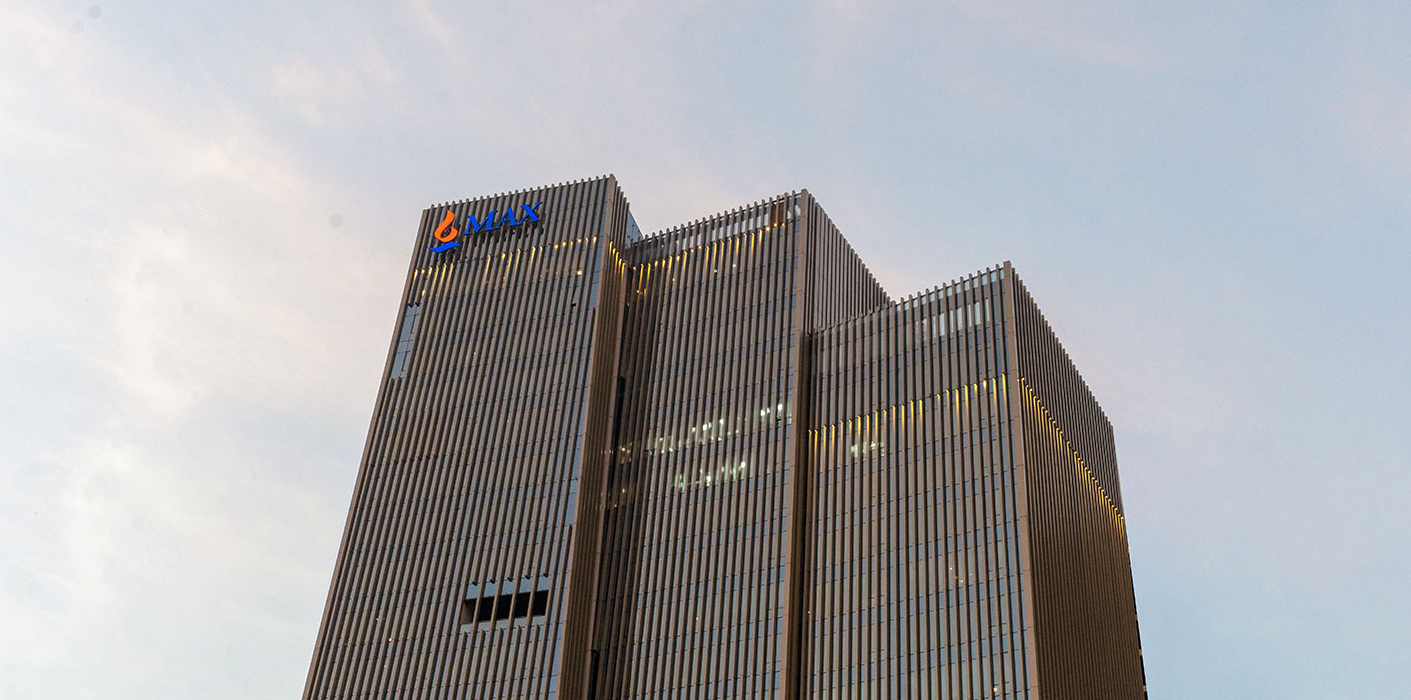
Workplace health used to be a cost. It is now a return.
For most of commercial real estate’s history, the financial case for a building rested on three variables: location, size, and specification. Health and wellness features, where they appeared at all, were treated as costs to be minimized or amenities to be added at the margin.
That framework has been displaced. The most sophisticated institutional investors, corporate occupiers, and listed real estate entities now treat workplace health as a primary investment variable – because the data connecting building health standards to financial performance has become too consistent to ignore.
Buildings designed and certified for occupant health command higher rents, sustain lower vacancy rates, attract longer lease tenures, and carry ESG premiums that translate directly into capital values. The premium for certified, wellness-oriented commercial space in Indian markets is no longer speculative. It is documented and growing.
This article makes the investment case: why workplace health is a smart commercial property decision, what it looks like in practice, and how the Delhi NCR market is pricing it.
Why Workplace Health Has Become an Investment Thesis
The shift happened at multiple levels simultaneously.
On the occupier side, hybrid work raised the stakes for every office. When employees can choose whether to commute, the office must justify the trip. Buildings that support health, focus, and energy convert the commute argument. Those that do not see lower attendance, higher attrition, and ultimately, lease non-renewals.
On the investor side, ESG mandates from institutional capital – pension funds, sovereign wealth vehicles, and listed REITs – have created a binding requirement to hold sustainable, certified assets. Buildings that cannot demonstrate third-party verified performance against environmental and health standards are increasingly excluded from institutional portfolios, regardless of location.
On the regulatory side, India’s SEBI-mandated BRSR framework requires listed companies to report on the environmental and social performance of their real estate footprint. This is driving corporate occupiers to demand certified space and is moving the requirement down through supply chains to mid-sized companies as well.
The convergence of these three forces has created a market in which workplace health is no longer a soft benefit. It is a hard financial driver.
The Financial Case for Health-Focused Office Space
The investment returns from workplace health certification are measurable across three distinct dimensions.
Premium Rents and Low Vacancy
The rent premium for Grade A certified commercial space over non-certified equivalents in Delhi NCR’s major micro-markets is consistently documented at 25-40%.
JLL’s India commercial data show that certified buildings in the Noida, Okhla, and Gurugram corridors maintain this premium through market cycles, including the period of supply uncertainty during and after the pandemic. The premium is not a temporary demand spike. It reflects a structural preference among the occupier segment that drives absorption.
Vacancy rates in certified Grade A buildings in these corridors are consistently below 10%. Non-certified buildings in comparable locations frequently run at 20-30% vacancy, competing on price rather than quality. The rent premium combined with the vacancy differential produces a significant net operating income advantage for certified assets over their lifecycle.
Longer Lease Tenures and Tenant Retention
Occupier investment in a high-quality, wellness-certified building is not limited to the rent cheque. Fit-out in Grade A space typically runs at Rs. 2,000-5,000 per square foot for premium corporate tenants. Once that investment is made, the incentive to relocate is significantly reduced.
This produces longer effective lease tenures in quality buildings than in conventional space. CBRE’s research on Indian commercial markets found that tenants in Grade A certified buildings renew at materially higher rates than those in non-certified buildings.
For investors, this translates directly into cash flow stability. A building with 90%+ occupancy on long leases from creditworthy corporate tenants is a fundamentally different asset from one with short leases and high turnover. The income certainty premium is real and reflected in cap rates.
ESG Premium and Institutional Capital Access
The fastest-moving financial driver for healthy commercial buildings is the ESG premium.
Global institutional capital – which represents the deepest source of liquidity for Indian commercial real estate through REITs, private equity, and direct investment – increasingly applies ESG screens to acquisitions. Buildings without credible third-party certification are removed from consideration or priced at a discount that reflects their expected reclassification costs.
GRESB-rated buildings trade at measurable premiums to non-rated peers in comparable markets globally. As Indian commercial real estate matures and REIT penetration increases, this pricing dynamic is transferring into domestic markets. Listed real estate entities with strong GRESB ratings – covering both environmental performance and health and wellness dimensions – command a lower cost of capital and higher equity multiples than those without.
For developers and investors building commercial portfolios for eventual institutional sale or REIT entry, the decision to pursue certification today is an exit decision multiple tomorrow.
What Health-Focused Office Design Looks Like
The design features that drive the financial premium are specific and independently verified.
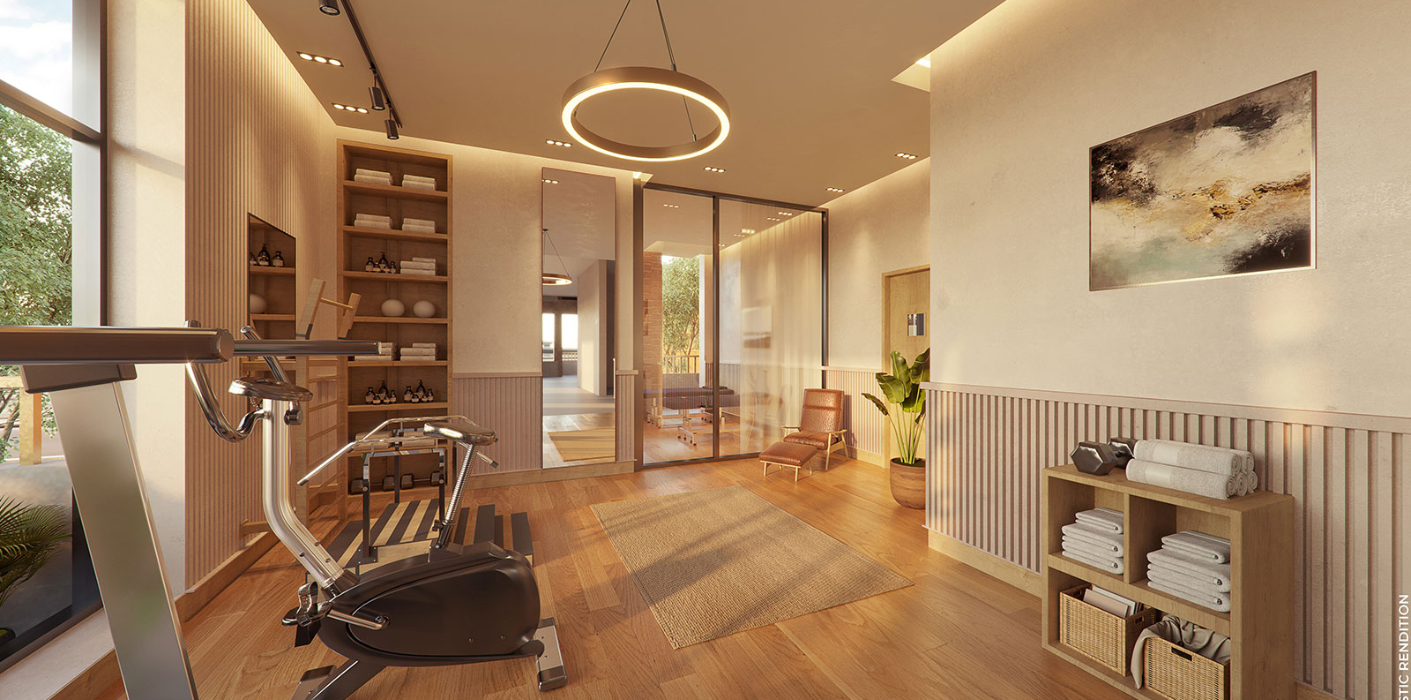
- Air quality systems: MERV-13 or better filtration, CO2 monitoring with automatic ventilation adjustment, and VOC-free materials in fit-out. In Delhi NCR, where outdoor AQI regularly reaches hazardous levels, indoor air quality engineering creates a measurable environmental delta between the building and the city outside.
- Daylight and views: Floor-to-ceiling glazing with optimized building orientation; layouts that ensure the majority of workstations have direct natural light access. Daylight access is one of the strongest predictors of employee satisfaction and attendance in office environments.
- Acoustic performance: Ceiling treatment, structural isolation from external noise, and zoned acoustic environments. Noise is consistently the top productivity complaint in open-plan offices. Buildings that address it structurally rather than through soft-furnishing workarounds command a clear preference among sophisticated occupiers.
- Green cover and biophilic design: Trees and planted areas on site, internal planting, and views to the landscape from the floor plate. Research from the World Green Building Council documents productivity gains of 6-15% in nature-integrated environments. Occupiers who understand this treat green cover as a specification requirement, not an aesthetic preference.
- Building management intelligence: Smart BMS with real-time monitoring of air quality, energy, and occupancy. Transparent performance data builds occupier confidence in the building’s operation and supports reporting requirements under BRSR and equivalent frameworks.
Each of these features is assessable through third-party certification. LEED, IGBC, WELL, and GRESB provide structured frameworks that translate design intent into verified performance.
The Investor Lens – What to Evaluate
For investors evaluating commercial property assets through a workplace health lens, the following criteria determine whether a building will hold its premium over a full investment cycle:
| Evaluation Criterion | Why It Matters |
| Third-party certification (LEED, IGBC, WELL, GRESB) | Independent verification of performance claims |
| Occupancy rate and history | Sustained full occupancy indicates genuine market validation |
| Rent premium to micro-market | Quantifies the certification premium in current conditions |
| Tenant quality and lease tenure | Credit quality and duration determine income certainty |
| Developer track record | Consistent delivery across multiple assets reduces execution risk |
| Green cover and density | Physical environment quality that supports the health thesis |
| Metro and transport access | Tenant’s employee commute quality affects lease renewal decisions |
A building that scores well across all seven is positioned for premium valuations, institutional-grade liquidity, and income stability. A building that scores well on location but poorly on certification and health design is at risk of repricing as market standards rise.
Max Estates Commercial Portfolio – The Investment in Action
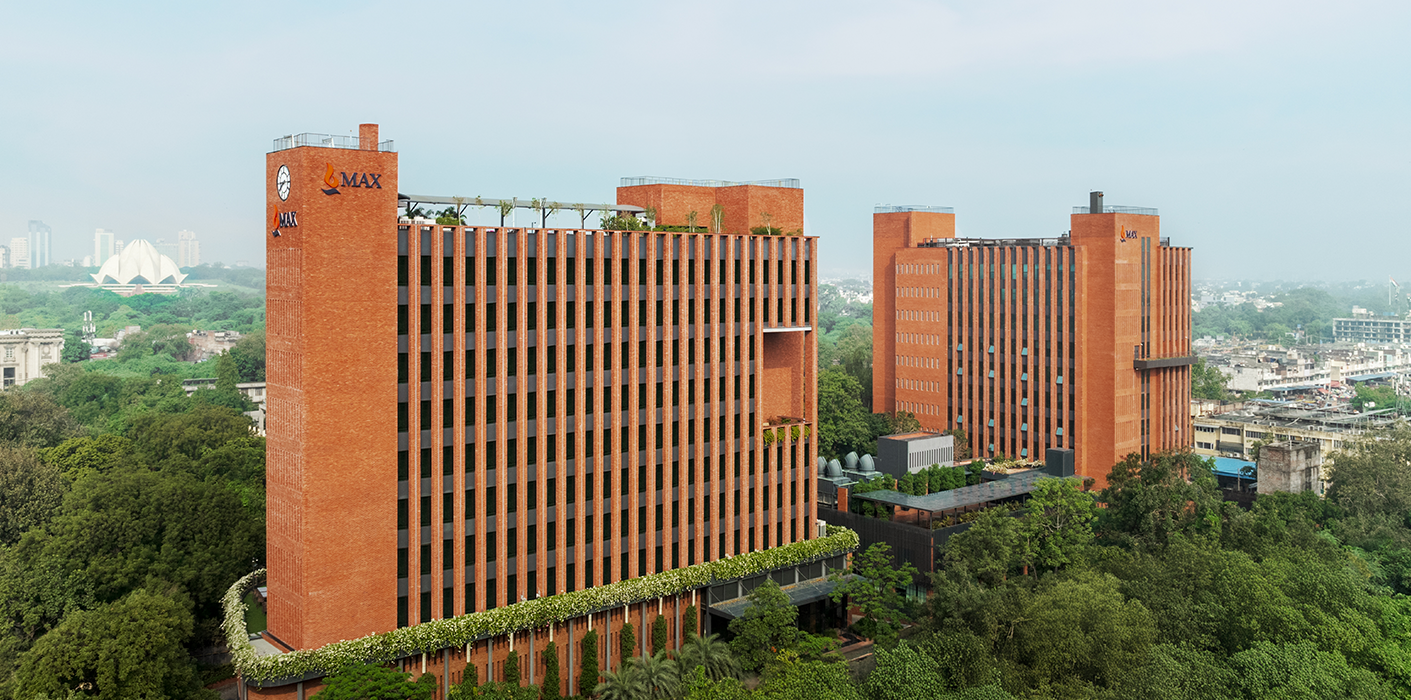
Max Estates’ commercial portfolio – Max Towers in Sector 16B, Noida, Max House in Okhla, New Delhi, and Max Square in Noida – demonstrates the financial outcomes of the workplace health investment thesis across three assets.
All three are 100% leased. All three have achieved rents at 25-30% above their respective micro-market averages. Max Estates holds a Dual GRESB 5-Star Rating (2025) – the highest possible rating from the Global Real Estate Sustainability Benchmark, independently verified across the portfolio.
Max Towers – Noida
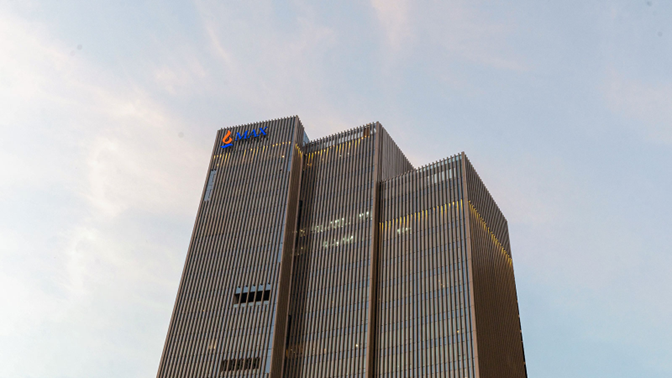
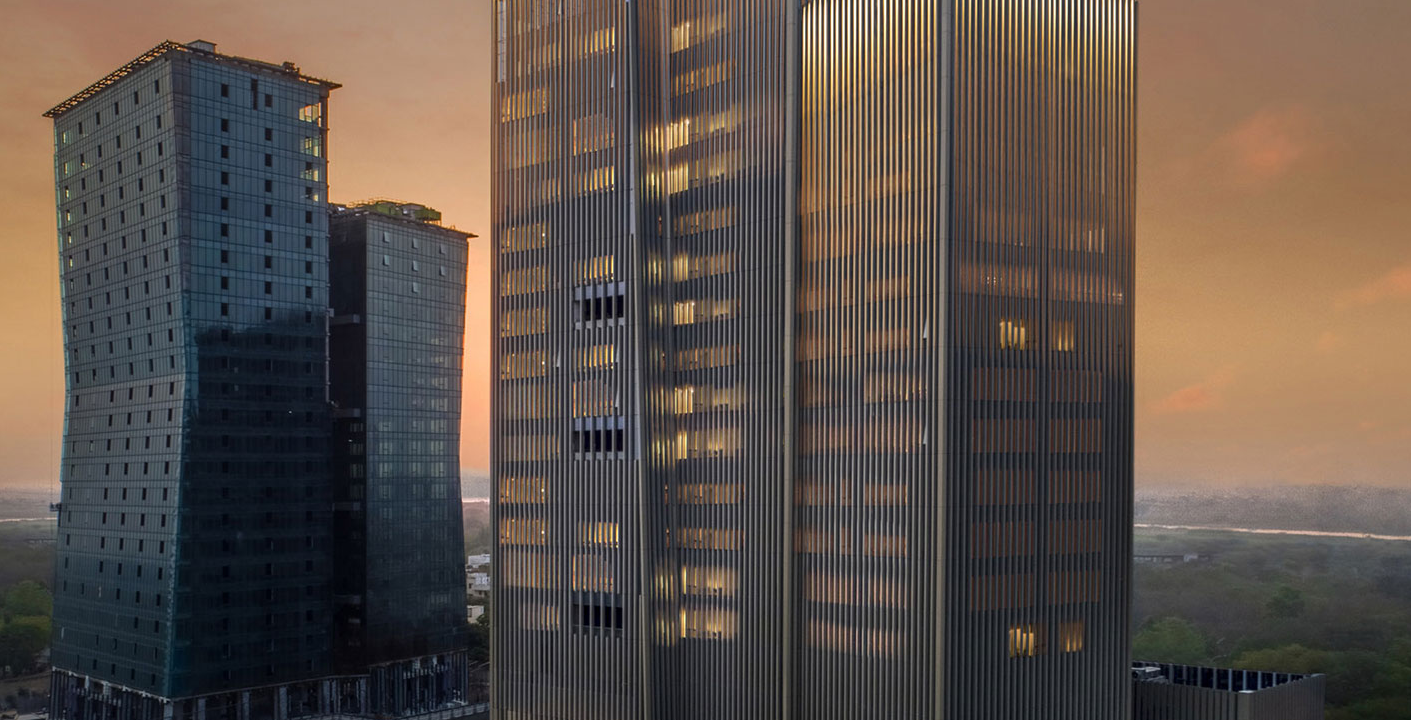
Max Towers in Sector 16B, Noida, is a Grade A+ commercial asset on the Noida Expressway corridor, 100% leased at a premium to the micro-market. Its location – 0.5 km from Okhla Bird Sanctuary metro station on the Magenta Line – delivers on the transport access criterion that occupiers and their employees require.
Max House – New Delhi
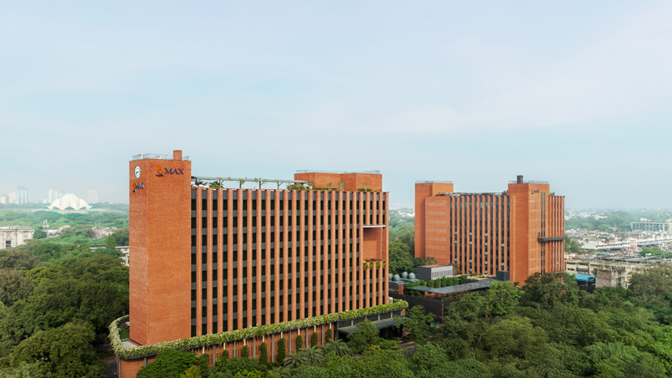
Max House in Okhla, New Delhi, holds both LEED Gold and IGBC Gold certifications; the dual-credential standard that institutional occupiers now treat as a baseline for new lease consideration. At approximately 1,05,000 square feet across 10 floors, it is 100% leased at a 25-30% premium to the Okhla micro-market.
The dual certification is directly relevant to the ESG premium argument. LEED Gold and IGBC Gold together provide the third-party verification that institutional capital requires. Max House is not just a well-performing asset. It is a certifiably well-performing asset; a distinction that matters as Indian commercial real estate moves toward greater institutional participation.
Max Square – Noida
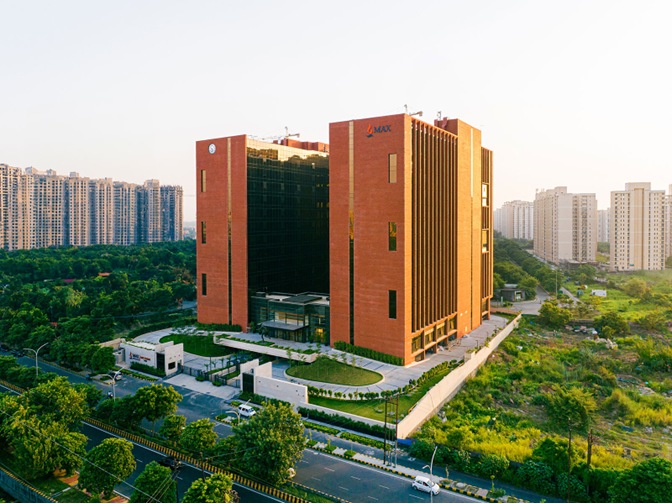
Max Square in Noida is home to Adobe’s 1.58-lakh-square-foot NCR office. Adobe’s global workplace strategy function evaluates buildings against formal standards covering environmental quality, occupant health, and design performance. Its decision to lease 1.58 lakh square feet at Max Square is the most credible independent validation available of the building’s quality.
For investors, an Adobe-grade corporate tenant on a large lease is the closest thing to a market-proof point that a building’s workplace health investment has been independently assessed and valued.
What This Means for Occupiers Too
The investment case and the occupier case are not separate arguments. They are the same argument from two perspectives.
An investor building a commercial asset to workplace health standards attracts the occupiers who value those standards and are willing to pay for them. An occupier choosing a certified building for its health benefits is also choosing an asset that their landlord has strong financial incentives to maintain and improve.
This alignment between investor incentives and occupier requirements is one of the defining features of the Grade A certified commercial market. It creates a reinforcing cycle: better buildings attract better tenants, better tenants validate higher rents, and higher rents fund continued investment in building quality.
The cycle works in reverse, too. Buildings that do not invest in workplace health lose the occupiers who care about it to those that do. Lower occupier quality drives lower rents. Lower rents reduce the return available for reinvestment in the asset.
In a market moving as quickly as Delhi NCR’s commercial sector, the compounding difference between these two trajectories is significant – and it starts with the decision to treat workplace health as an investment, not a cost.
Interested in a Grade A+ commercial portfolio in Noida and New Delhi? Visit Max Estates to learn more about their commercial properties.