

Most buyers evaluate a home by what they can see. Very few evaluate it by what they can hear.
That is a mistake. Noise is one of the most damaging and least visible factors in residential quality of life. The World Health Organization links chronic noise exposure to sleep disorders, cardiovascular stress, reduced cognitive function, and elevated cortisol levels. In dense urban markets like Delhi NCR, this is not a hypothetical risk. It is a daily reality.
Acoustic design is the discipline that addresses this problem at the architectural level. It shapes how sound moves through a building, how much external noise enters a home, and how much internal noise travels between units and floors.
In luxury and ultra-luxury residential projects, acoustic design is no longer optional. It is one of the clearest markers that separates a project built for well-being from one built purely for visual appeal. Often unnoticed when done well, it quietly shapes comfort, focus, and peace of mind.
This article explains what acoustic design involves, why it matters, and what to look for before you buy.
What Is Acoustic Design?
Acoustic design is the deliberate engineering of a building to control sound. It covers three distinct problems:
- Sound insulation: blocking external noise from entering the home (traffic, aircraft, construction)
- Sound absorption: reducing echo and reverberation inside individual spaces
- Sound isolation: preventing noise from traveling between units, floors, and common areas
A well-designed home addresses all three. Most standard residential projects address none of them beyond minimum compliance.
The difference is often subtle yet immediately felt. Spaces designed with acoustic comfort tend to feel calmer, more restorative, and easier to inhabit throughout the day.
Why Noise Is a Real Health Problem
The WHO classifies environmental noise as the second largest environmental health risk in Europe after air pollution. India’s urban centers face the same problem, often worse.
Key findings from global health research:
- Chronic exposure to noise above 55 decibels at night raises the risk of hypertension and heart disease
- Sleep disruption from noise leads to measurable cognitive decline over time
- Children in noisy homes show lower reading scores and impaired memory development
- Workplace productivity drops 66% in noisy open environments; the same effect applies at home for those who work remotely
In Delhi NCR, residents near expressways, metro corridors, and commercial zones are routinely exposed to noise levels well above the WHO’s recommended residential limit of 45 decibels at night.
A home that ignores this is not a wellness home, regardless of what the brochure says.
As conversations around wellbeing evolve, acoustic comfort is becoming an increasingly important aspect of residential design.
How Acoustic Design Works in Residential Projects
Acoustic design operates at multiple levels. Each layer adds protection. Together, they create the quality of silence that defines a genuinely well-designed home.
Building Materials and Construction
The choice of materials at the wall, floor, and ceiling level determines how much sound passes between spaces.
- Double-glazed or triple-glazed windows block traffic and aircraft noise far more effectively than standard single-pane glass
- Hollow-core vs. solid-core doors make a significant difference in inter-room sound travel
- Floating floor systems decouple the floor from the structural slab, reducing impact noise (footsteps, dropped objects) between floors
- Acoustic insulation within walls reduces flanking transmission between adjacent units
In premium construction, these are standard specifications. In typical mid-market projects, they are omitted to reduce costs. Together, these elements contribute to a quieter and more comfortable living environment.
Layout and Floor Plan Design
Acoustic performance is also shaped by how a floor plan is arranged – before a single material is chosen.
Thoughtful layout decisions include:
- Placing bedrooms away from lifts, staircases, and common areas
- Keeping utility spaces (kitchens, bathrooms) adjacent to each other across units, so noise-generating areas do not sit next to quiet areas in the neighbouring home
- Orienting living spaces away from road-facing facades in high-traffic locations
- Designing double-height or buffer entry lobbies that create a transition zone between the external environment and the home
These decisions may not always be visible, but they can significantly influence the experience of daily living.
Landscape as a Sound Buffer
Natural elements are among the most effective acoustic tools available in residential design.
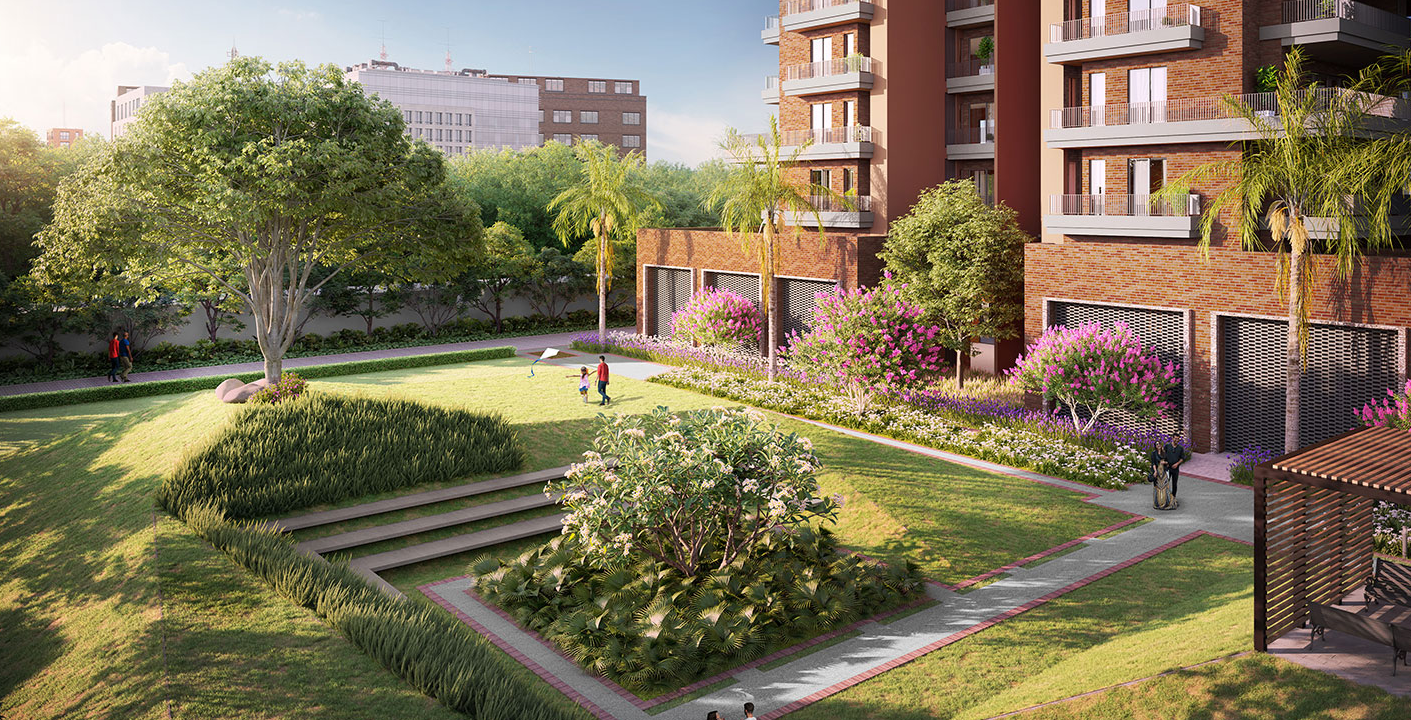
Dense tree plantings, water features, and earth berms all absorb and deflect sound. A mature tree canopy can reduce traffic noise by 5-10 decibels. Rows of dense shrubs and ground cover provide further attenuation.
This is why projects with significant green cover – measured in tree count and canopy density, not just lawn area – deliver a noticeably quieter environment than urban blocks without it.
It also explains why low-density projects, where the ratio of green space to built area is high, consistently outperform high-density projects on acoustic quality – even before building-level interventions are considered. Landscape, in this sense, serves both environmental and experiential purposes.
What Acoustic Quality Looks Like at the Project Level
Acoustic performance in a residential project is the sum of its decisions on density, materials, layout, and landscape. Here is a quick checklist for buyers evaluating any project:
| Factor | What to Ask |
| Window specification | Are windows double-glazed or better? |
| Floor construction | Is there a floating floor or impact insulation between floors? |
| Wall specification | Are party walls between units acoustically insulated? |
| Layout | Are bedrooms placed away from lifts, stairs, and road facades? |
| Green cover | How many trees? What is the canopy density? |
| Density | How many units per acre? Lower is better. |
| Certifications | Does the project hold WELL, LEED, IGBC, or GRESB certification? |
A developer who cannot answer these questions specifically has not prioritized acoustic quality in the project.
Wellness Real Estate in India: The Acoustic Gap
India has no mandatory residential acoustic standard comparable to those in the UK, Germany, or Singapore. This means developers are free to build to minimum compliance – and most do.
The result is a significant quality gap between projects that deliberately address acoustic design and those that do not.
Buyers at the luxury end of the market increasingly recognise this. JLL’s 2024 India Residential Report noted that “environmental quality within the home” – covering air, light, and noise – had become a top-five buying criterion for buyers in the Rs. 3 Cr+ segment, up from outside the top ten in 2019.
Projects that solve the noise problem command a measurable premium. Those that ignore it depreciate relative to the segment over time.
How Max Estates Approaches Acoustic Design
Max Estates builds its residential projects within the LiveWell framework – a nine-pillar approach to well-being that includes Environmental Harmony, Intentional Design, and Peace of Mind. Each pillar translates into specific design decisions; acoustic quality is embedded across all three.
Max Estates also holds a Dual GRESB 5-Star Rating (2025), covering both residential and commercial portfolios. GRESB assessment includes building performance metrics that encompass environmental quality within the home. This is third-party verified, not self-claimed.
Estate 128 – Silence at Scale
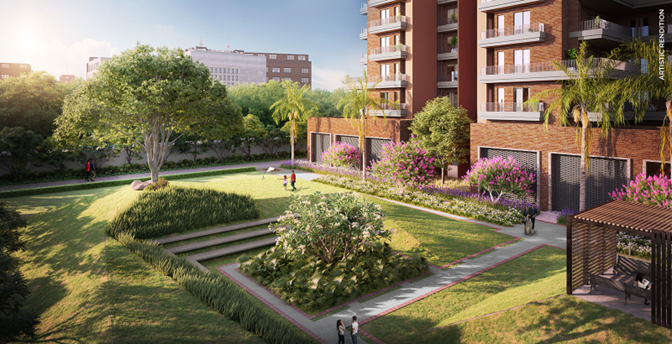
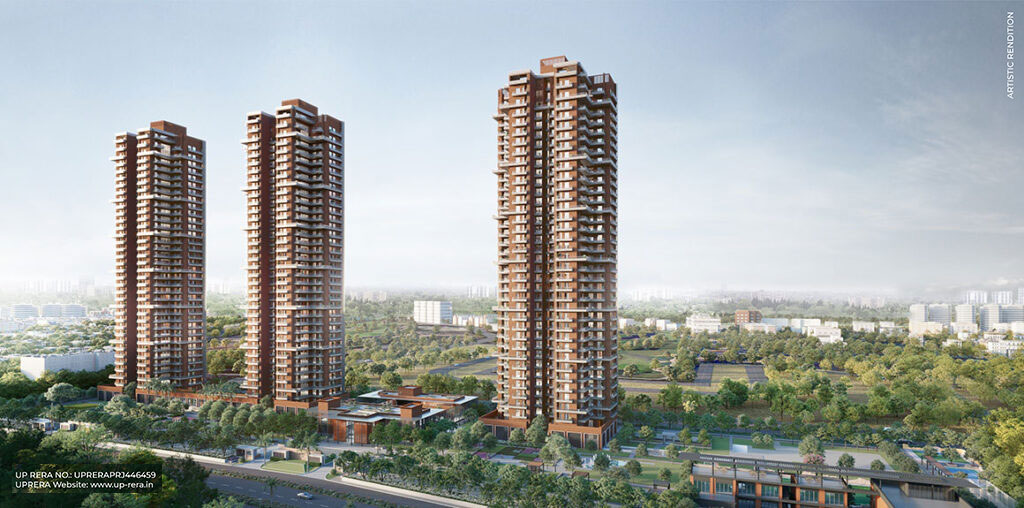
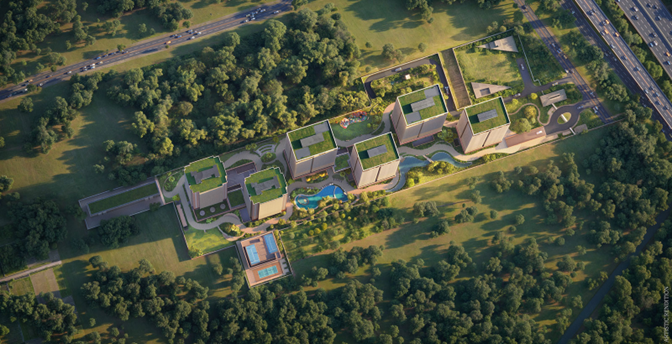
Estate 128 in Sector 128, Noida, has been designed with a low-density approach, with 268 residences across 10 acres. That density ratio is under 27 units per acre, which is significantly lower than the Noida Expressway corridor average.
The landscape spans 7 acres on a river-journey theme. The scale of green cover creates a natural acoustic buffer between the towers and the expressway corridor. Combined with the low density and the LiveWell-driven design brief, the result is a level of ambient quiet that is unusual in this micro-market. 4 BHK apartments start at Rs. 11.35 Crore. RERA: UPRERAPRJ446459.
Together, these elements help shape a sense of calm that is increasingly valued in urban living.
Estate 360 – Biophilic Sound Reduction
Estate 360 in Sector 36A, Gurugram features 700 trees and 33 plant species across 11.8 acres. The density of planting at this project is not decorative; it serves a measurable acoustic function.
The project is also the first intergenerational residential community in Delhi NCR. Acoustic quality is especially critical here, given the presence of senior residents and children, both of whom are more sensitive to noise disruption than the average adult.
As an intergenerational community, the project places particular emphasis on comfort, accessibility, and everyday wellbeing across age groups.
Estate 105 – Designed Around How You Live
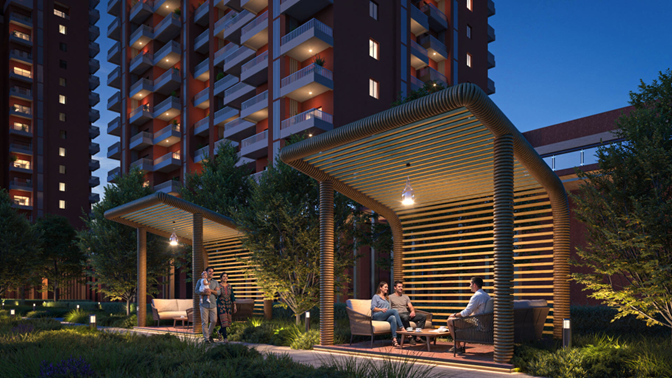
Estate 105 in Sector 105, Noida, is built around a movement-first design brief. The same intentionality that shapes its floor plans and circulation spaces extends to environmental quality. Acoustic comfort is a component of how residents experience movement and rest within the community.
Here, acoustic quality forms part of a broader effort to create spaces that support both movement and moments of rest.
Five Questions to Ask Any Developer
Before you commit to a project, ask these directly:
- What is the window specification? Single, double, or triple glazed?
- What acoustic separation exists between floors and between units?
- How many trees and what canopy cover does the landscape provide?
- What is the density in units per acre?
- Does the project hold any third-party wellness or sustainability certification?
Specific answers indicate a developer who has thought about this. Vague answers indicate one who has not.
Silence Is a Design Choice
Acoustic design does not happen by accident. It is the result of deliberate decisions made at every stage – from site selection and density planning to materials specification and landscape design.
In Delhi NCR’s luxury residential market, the projects that will hold value over the next decade are those built with this level of intentionality. A quiet home is not a small comfort. It is a measurable contributor to health, cognitive performance, and quality of life.
The buyers who understand this now will make significantly better decisions than those who discover it after possession.
Ready to experience the difference? Book a site visit with Max Estates and walk through Estate 128, Estate 360, or Estate 105 with acoustic quality in mind.