
NRI investment in Indian real estate reached record levels in 2023 and 2024, with Delhi NCR capturing a disproportionate share of this capital. This trend is driven by an unprecedented infrastructure pipeline, international-standard luxury projects, risk-reducing regulatory reforms, and structural currency advantages for buyers converting USD, GBP, AED, or SGD.
Knight Frank’s Wealth Report 2024 highlights that NRI buyers from the UAE, UK, USA, and Singapore lead ultra-luxury residential transactions in Delhi NCR. Their motivations combine financial and personal goals: capital appreciation, rental income, parent care, and securing a property to return to.
This article examines seven key factors fueling NRI investments into Delhi NCR real estate in 2026 and evaluates the implications for current buyers.
The Scale of NRI Investment in Indian Real Estate
India receives the world’s largest remittance inflow annually. A growing share of that capital is finding its way into real estate rather than returning purely to family support.
ANAROCK’s NRI survey data shows that real estate consistently ranks as the preferred asset class for India-directed investment among NRIs, ahead of equities, fixed deposits, and gold. The motivation mix has shifted: where earlier NRI buyers were primarily driven by emotional connection and family need, today’s NRI real estate investor is making a calculated financial decision alongside the personal one.
Delhi NCR attracts NRI capital from two distinct pools. The first is the UP and Haryana diaspora – NRIs with family roots in the NCR who are buying for parents, family gatherings, and eventual return. The second is the pan-India professional diaspora – software engineers in the US, finance professionals in London, business owners in Dubai – who view Delhi NCR as India’s most liquid, infrastructure-rich real estate market and the strongest appreciation play available at this stage of the market cycle.
Reason 1 – The Currency Advantage
The most straightforward financial case for NRI investment in Delhi NCR real estate is the currency tailwind.
An NRI earning in USD, GBP, AED, or SGD and investing in assets benefits from a structural conversion advantage. A Rs. 11 Crore apartment – the entry price for ultra-luxury in Sector 128, Noida – represents roughly $130,000 USD at current exchange rates. The same specification level in Dubai, Singapore, or London would cost multiples of that figure.
It reflects a real opportunity: Indian luxury real estate is underpriced relative to comparable international markets when evaluated in hard currency terms. As India’s economy grows, as urban incomes rise, and as the quality of residential supply in Delhi NCR approaches international benchmarks, this gap is expected to compress. NRIs who invest now are positioned on the right side of that compression.
The currency advantage also affects appreciation returns. A 15% capital appreciation in rupee terms translates to a higher return in the NRI’s home currency if the rupee holds or strengthens against that currency over the holding period.
Reason 2 – Infrastructure Delivery at Scale
No other Indian city is delivering infrastructure at the scale and pace of Delhi NCR in 2026.
Dwarka Expressway reached full operationalisation in 2024, connecting western Gurugram to IGI Airport and central Delhi. The Magenta Line metro is operational, linking the Noida Expressway to South Delhi, Hauz Khas, and onwards. Jewar International Airport is under active construction – the largest greenfield airport project in India, positioned within the catchment of the Noida Expressway corridor.
Each of these infrastructure events reprices its residential catchment. NRI investors who understand the relationship between infrastructure delivery and property appreciation – a pattern well-established in Dubai, Singapore, and London – recognise Delhi NCR’s current infrastructure cycle as one of the strongest appreciation opportunities available in global real estate.
The Jewar Airport catalyst is particularly significant. When it opens, Noida Expressway sectors will be closer to an international airport than most of Gurugram currently is to IGI. This repricing is ahead of us, not behind us. NRIs who enter now are positioned before it completes.
Reason 3 – The Parent-Care Solution
One of the most consistent motivations among NRI buyers in Delhi NCR is not financial. It is the question of parents.
For NRIs who have built careers abroad while parents age in India, the anxiety of distance is real and persistent. Standard solutions – moving parents to a flat in the same city, relying on domestic help, frequent India visits – are imperfect. What NRI buyers increasingly seek is a residential community where parents can live independently with professional care infrastructure within reach.
This is precisely what Estate 360 by Max Estates in Sector 36A, Gurugram delivers. As the first intergenerational residential community in Delhi NCR, Estate 360 includes two dedicated towers managed by Antara Senior Living – the Max Group’s integrated senior care brand. Parents can live in a formally managed senior environment with healthcare access, while the adult child’s family occupies an apartment within the same community.
For NRI buyers in their 40s managing careers abroad and ageing parents in India, this single project concept addresses the most persistent source of NRI family anxiety. No other project in Delhi NCR offers this combination at scale.
Reason 4 – Return Planning and Retirement
A significant and growing segment of NRI real estate buyers in Delhi NCR are purchasing with a 5-10 year return horizon in mind.
India’s economic trajectory – a $3.7 trillion economy targeted to reach $7 trillion within a decade – is creating a pull for professionally successful NRIs who are evaluating when and where to return. Delhi NCR, as India’s political, commercial, and cultural capital, is the natural destination for a large share of this cohort. [Hindustan Times, Data for India]
Buying a premium residence in Delhi NCR now – at current prices, with construction commencing – positions the returning NRI to move into a completed, mature-community home rather than re-entering a rising market as a buyer. The 3-7 year under-construction horizon of current projects aligns well with typical NRI return timelines.
Projects designed with a high specification and formal wellness frameworks – like Max Estates’ LiveWell philosophy, applied across Estate 128, Estate 360, and Estate 105 – appeal specifically to NRIs who have lived in well-designed international residential environments and want the same quality on return.
Reason 5 – RERA and Developer Accountability
For NRI buyers who cannot visit India frequently to monitor construction progress, regulatory protection is not optional – it is the primary risk management tool.
RERA has materially improved the Indian real estate purchase experience for all buyers, but its impact is disproportionately significant for NRIs. Mandatory collection accounts prevent fund diversion. Legally registered possession timelines are enforceable. Grievance redressal is accessible without physical presence in India.
The availability of listed developers – publicly traded on BSE and NSE with audited financials and SEBI accountability – further reduces execution risk. A listed developer’s financial health is public, verifiable, and subject to regulatory oversight. An NRI buyer in Dubai or London can independently assess a listed developer’s financial position before committing, which was not possible with unlisted developers before SEBI’s transparency requirements.
Max Estates (BSE/NSE: MAXESTATES) is among the clearest examples of what listed developer accountability means for NRI buyers. Its FY26 pre-sales of Rs. 5,305 Crore, Dual GRESB 5-Star Rating (2025), and $4 billion parent group provide multiple layers of independent validation that give NRI investors buying from abroad genuine confidence.
Reason 6 – Specification Quality Has Caught Up
A decade ago, NRI buyers evaluating Indian residential projects often found a gap between the international standard they were accustomed to and what Indian luxury supply offered. That gap has narrowed significantly in Delhi NCR.
The best current projects in the NCR – in terms of green cover, density ratios, wellness infrastructure, smart home systems, and sustainability credentials – are competitive with premium residential development in Dubai, Singapore, and parts of London. They are not identical, but the quality differential that once discouraged NRI buyers who had experienced international residential standards no longer justifies choosing abroad over India.
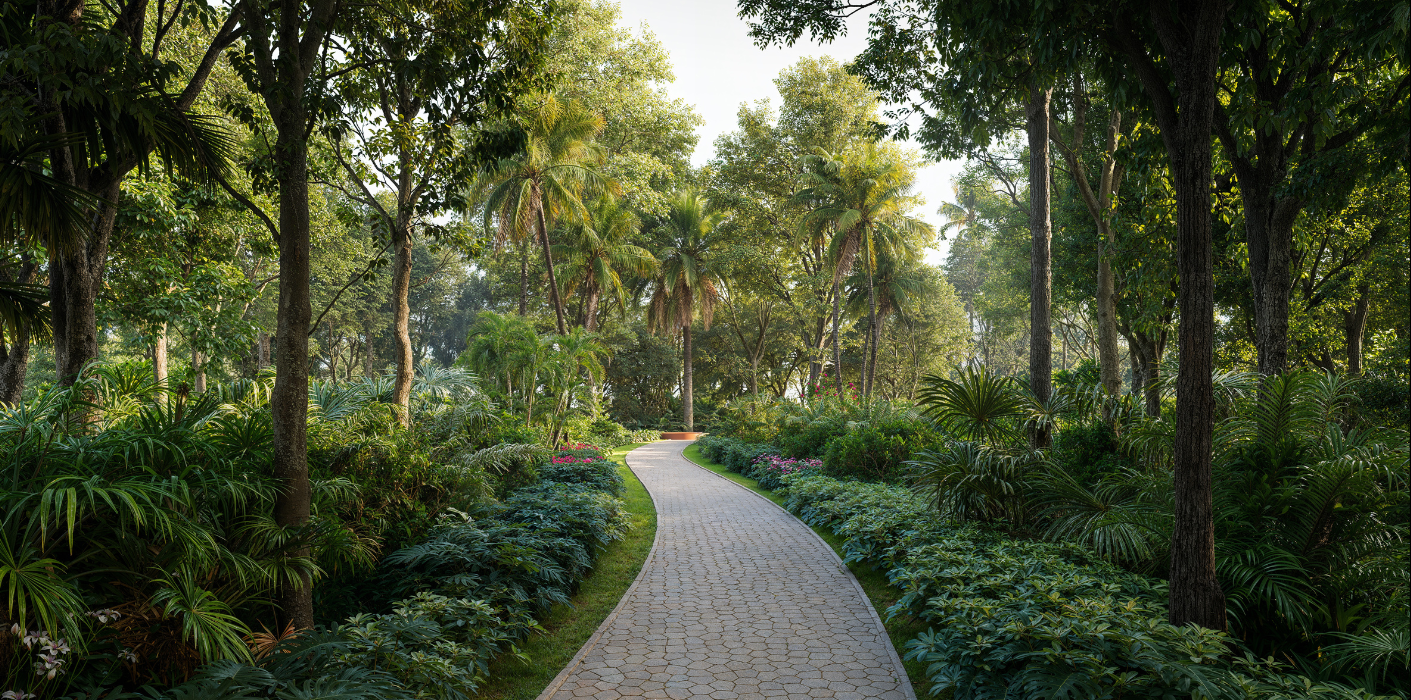
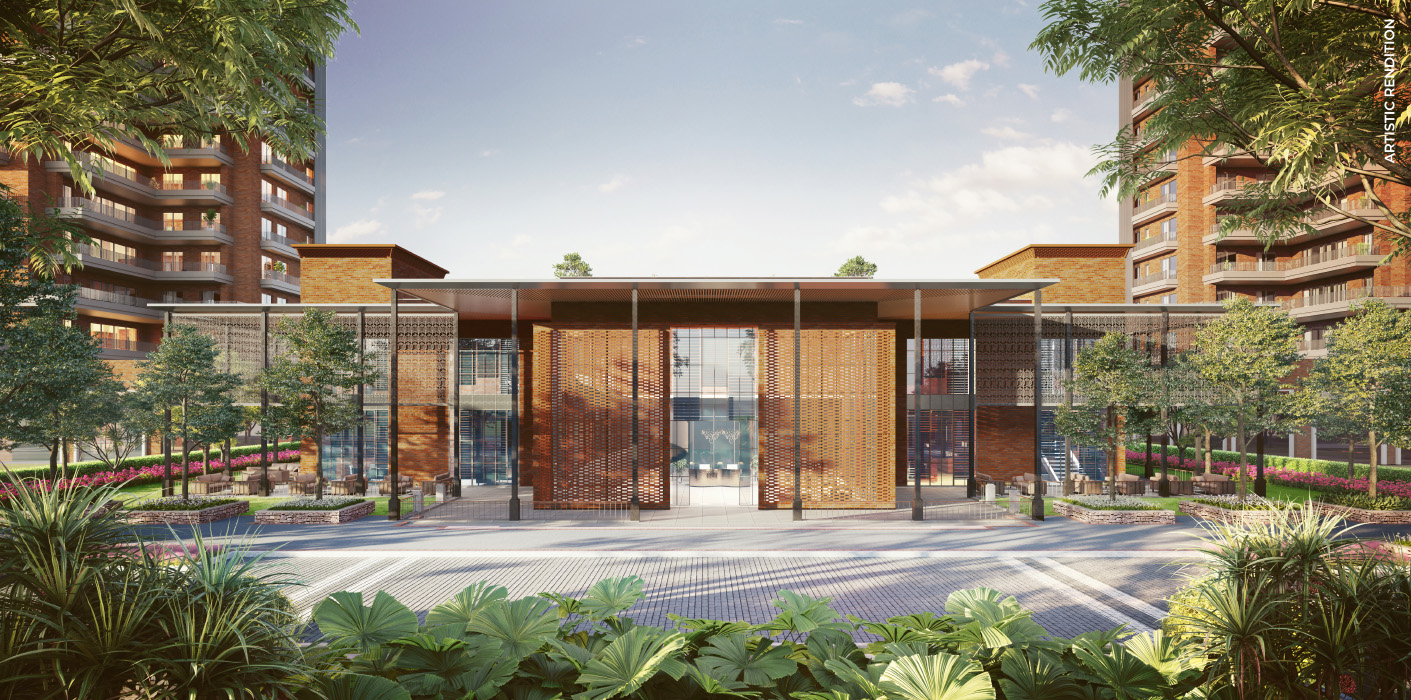
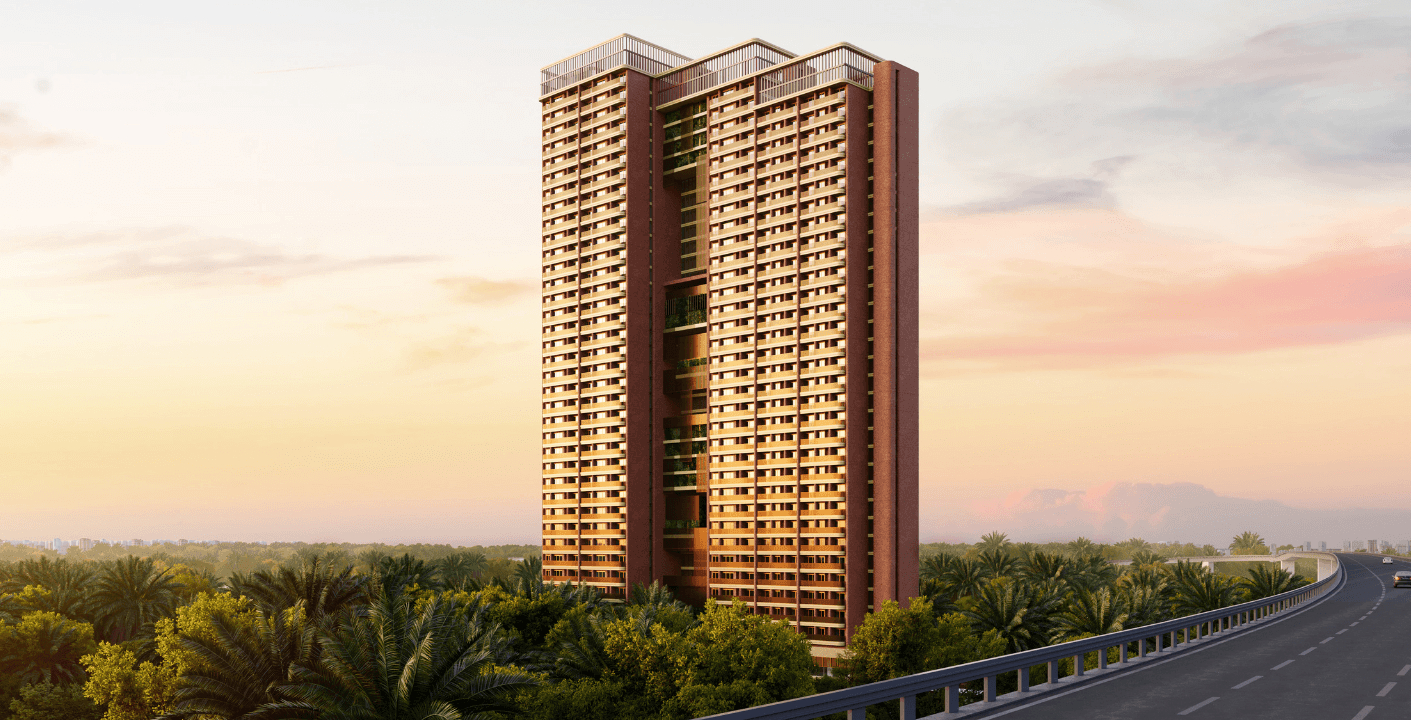
Projects like Estate 128 in Sector 128, Noida – 268 units on 10 acres with 4 BHK apartments from Rs. 11.35 Crore, a 7-acre river-journey landscape, and a LiveWell wellness framework – represent a specification that NRI buyers from mature markets recognise as comparable to what they are used to. The price point, in hard currency, is a fraction of equivalent quality elsewhere.
Reason 7 – The Jewar Airport Appreciation Play
Jewar International Airport is the most significant single real estate appreciation catalyst in India right now – and it is specifically located in the catchment of Delhi NCR.
Airport-proximity appreciation is one of the most consistent patterns in global real estate. Mumbai’s Navi Mumbai Airport is already producing visible appreciation in its catchment. Bengaluru’s KIAL corridor has appreciated consistently for a decade. Globally, residential markets within 15-20 km of a new international airport reprice significantly as the opening date approaches.
NRI buyers who understand this pattern – and many do, because they have lived through it in Dubai, Singapore, and other airport-adjacent residential markets – are entering the Noida Expressway corridor specifically for this play. The Jewar repricing is ahead of us, not complete. The window for positioning before it completes is open in 2026 and unlikely to remain open indefinitely.
What NRIs Buy in Delhi NCR
NRI buyer behaviour in Delhi NCR in 2026 reflects the motivations above:
| Buyer Profile | Primary Motivation | Preferred Product |
| UAE-based business families | Appreciation and return planning | Ultra-luxury 4-5 BHK, Noida Expressway |
| UK/US technology professionals | Jewar Airport play; rental yield | New launch luxury, Sector 105-128 |
| Gulf-based professionals | Parent care; NRI community housing | Intergenerational community, Gurugram |
| Singapore/Australia-based executives | Specification quality; return home | Premium 3-4 BHK, Dwarka Expressway |
| Pan-India diaspora investors | Portfolio diversification; yield | Mixed-use or commercial, Sector 16B |
The common thread across all profiles is a preference for listed developers, RERA-registered projects, and projects with independent sustainability credentials. NRI buyers who have done their research do not compromise on developer credibility.
What Max Estates Offers NRI Investors
Max Estates’ Delhi NCR portfolio addresses diverse NRI motivations:
- Estate 128 (Sector 128, Noida): Offers 268 ultra-luxury units on 10 acres, leveraging Jewar Airport appreciation.
- Estate 360 (Sector 36A, Gurugram): India’s first intergenerational community featuring Antara Senior Living.
- Estate 105 (Sector 105, Noida): A new launch with movement-first design and strong yield potential.
- Max One (Sector 16B, Noida): Mixed-use project with commercial adjacency and metro connectivity (Magenta Line at 0.5 km).
All projects share strong developer credentials: BSE/NSE listing, Dual GRESB 5-Star (2025) rating, Rs. 5,305 Crore FY26 pre-sales, and backing from the $4 billion Max Group.
With active infrastructure growth, verified developer accountability, high specifications, and favorable currency conversion, this is a time-sensitive investment opportunity.
Ready to explore? Book a site visit with Max Estates’ NRI support team regarding Estate 128, Estate 360, Estate 105, and Max One.