

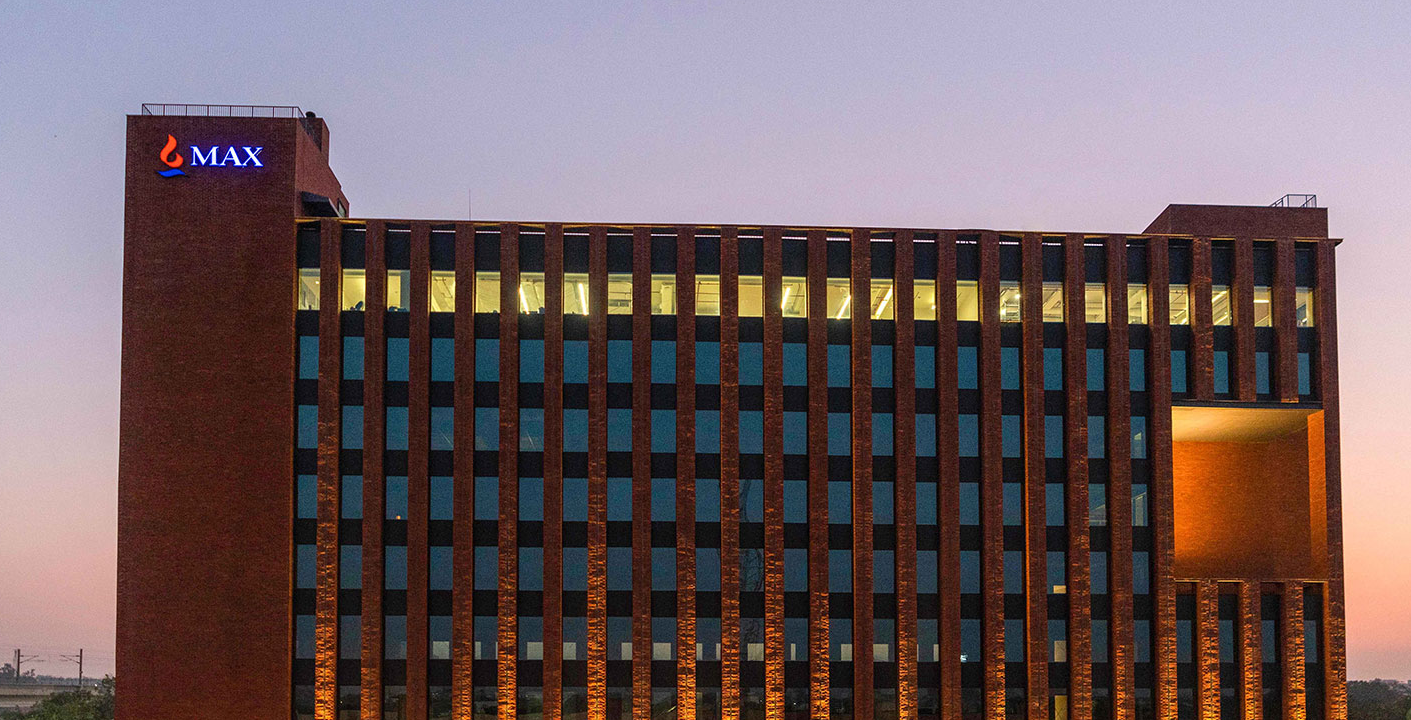
The office is no longer just a place to work. It is a health intervention.
Corporate wellness programs have expanded dramatically over the last decade. Companies spend significantly on mental health benefits, gym memberships, nutrition counseling, and stress management platforms. Most of this investment is aimed at the individual employee.
The building is rarely part of the conversation. That is a structural oversight.
The physical environment in which employees spend 8-10 hours a day determines air quality, light exposure, acoustic stress, thermal comfort, and access to natural spaces. These factors directly affect cognitive performance, emotional regulation, physical health, and the ability to focus and recover. No wellness benefit program compensates for a building that works against the people inside it.
Grade A commercial property addresses this at the source. It builds the wellness infrastructure into the space itself – through certified design standards, biophilic environments, and independently verified performance benchmarks.
This article examines the link between office quality and workforce health, and why the decision to occupy Grade A certified space is one of the most consequential wellness investments a company can make.
What Corporate Wellness Actually Means in 2026
Corporate wellness has evolved well beyond free fruit in the pantry.
The most sophisticated occupiers in India’s commercial real estate market now operate formal wellness strategies that span physical health, mental health, social connection, and the built environment. The built environment component – historically the most neglected – is receiving growing attention as the evidence base for its impact has strengthened.
The WELL Building Standard, developed by the International WELL Building Institute, provides the most comprehensive framework for evaluating how a building affects occupant health. It assesses performance across ten categories: air, water, nourishment, light, movement, thermal comfort, sound, materials, mind, and community.
Companies that occupy WELL-certified or equivalent spaces are not just making a real estate decision. They are making a health investment with documented returns in productivity, attendance, and retention.
The distinction matters for occupier companies at multiple levels. HR leaders responsible for wellness outcomes. CFOs evaluating the total cost of workspace versus the productivity it generates. Real estate teams are making lease decisions that will govern the employee experience for five to ten years.
The Office as a Wellness Infrastructure
A building’s impact on occupant health operates through several mechanisms simultaneously. Understanding them separately makes the cumulative case for Grade A space more concrete.
Air Quality and Cognitive Performance
Indoor air quality is the most critical building factor for cognitive function. Research from the Harvard T.H. Chan School of Public Health shows that employees in offices with superior ventilation and low CO2 levels achieved 61% higher cognitive scores than those in standard settings.
In Delhi NCR, where hazardous outdoor AQI is common, building filtration is vital. Grade A buildings utilizing MERV-13 or higher filtration provide significantly cleaner air than the external environment, whereas conventional buildings do not.
For knowledge workers, air quality directly influences concentration and decision-making. Investing in high-standard indoor air quality is not a choice for aesthetics but a strategic commitment to maximizing workforce cognitive performance.
Light, Acoustics, and Thermal Comfort
Circadian lighting aligns with natural rhythms to reduce fatigue and enhance mood and sleep quality. Grade A buildings maximize this through floor-to-ceiling glazing and optimized layouts, unlike conventional designs that often create dark interior zones.
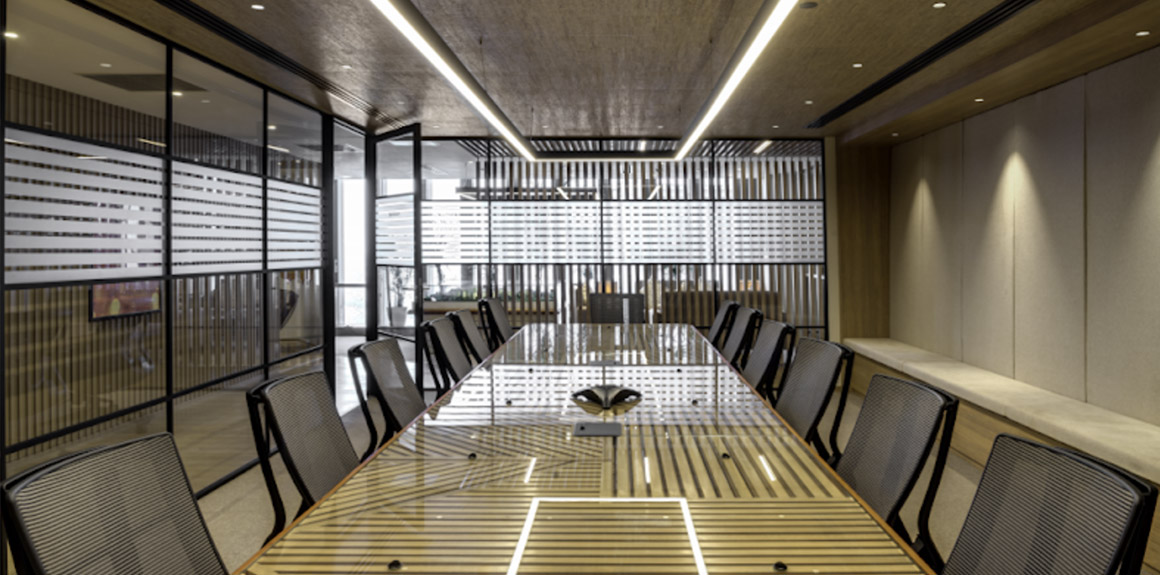
Superior acoustic performance, achieved through specialized treatments and noise isolation, is a hallmark of Grade A spaces that aids concentration. This addresses noise, which University of Sydney research identifies as the primary global workplace distraction. Furthermore, Grade A engineering ensures consistent thermal comfort across floor plates, eliminating the productivity-dampening temperature fluctuations common in standard buildings.
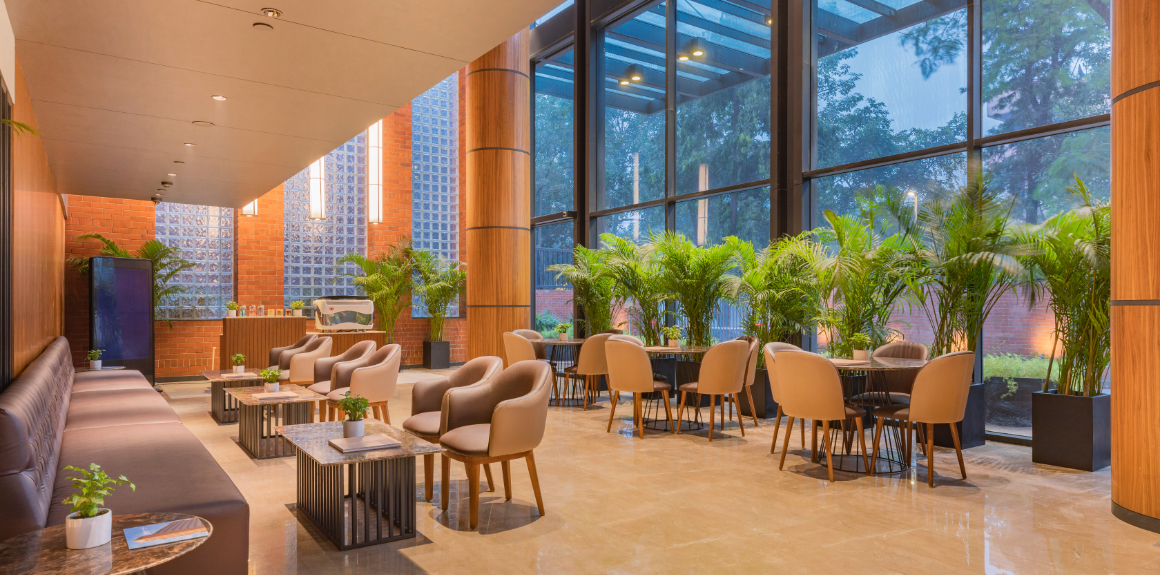
Green Space and Biophilic Design
The evidence for biophilic design in commercial settings is as strong as in residential.
A study by the Human Spaces Report found that employees in offices with natural elements reported 15% higher well-being and 6% higher productivity. Separate research by the World Green Building Council documented productivity gains of up to 11% from improved air quality alone, with further gains attributed to access to daylight and views of nature.
In practical terms, this means buildings with significant green cover on site, internal planting, views to external landscape, and natural materials in common areas deliver measurable performance advantages over those without.
Why Grade A Commercial Property Delivers Wellness
The reason Grade A certification matters is not that the label itself delivers wellness. It is that achieving the certification requires meeting specific, independently verified standards across the dimensions above.
A LEED Gold-certified building has demonstrated to a third party that it meets rigorous thresholds for energy efficiency, indoor environmental quality, water use, and site performance. IGBC Gold applies equivalent standards within the Indian context. GRESB assesses portfolio-level ESG performance for institutional and listed real estate entities.
Buildings without these certifications may claim equivalent performance. There is no mechanism to independently verify those claims.
For occupiers making 5-10 year lease commitments, this distinction matters. A certified building provides contractual certainty about the quality of the environment in which you are placing your workforce. An uncertified building does not.
The market has recognized this. JLL’s India commercial research consistently shows that Grade A certified buildings in Delhi NCR command rent premiums of 25-40% above non-certified peers in the same micro-market – and maintain significantly lower vacancy rates through market cycles.
Occupiers willing to pay that premium are making a rational calculation: the productivity gains, talent benefits, and wellness outcomes of a certified building outweigh the cost differential over a standard lease tenure.
What the Data Says About Workforce Performance
The quantified case for office quality and workforce performance has strengthened considerably in the last five years.
Key findings from peer-reviewed research and institutional studies:
| Factor | Documented Impact |
| Improved ventilation and low CO2 | 61% higher cognitive scores (Harvard, 2015) |
| Natural light access | 46 minutes more sleep per night; higher alertness (Northwestern University) |
| Biophilic design elements | 15% higher well-being; 6% higher productivity (Human Spaces Report) |
| Acoustic optimisation | Noise identified as top productivity barrier by 69% of office workers (University of Sydney) |
| Indoor air quality improvement | Up to 11% productivity gain (World Green Building Council) |
These are not marginal improvements. Across a workforce of 500 knowledge workers, a 6% productivity gain generates more value than years of rent differentials between Grade A and conventional space.
The HR case is equally strong. CBRE’s 2024 India survey found that 58% of employees cited office quality as a factor in job acceptance and retention. Among technology workers, the figure rose to 71%. In a tight talent market, the office is a recruitment asset – or a liability.
Max Estates Commercial Portfolio – Built for Corporate Wellness
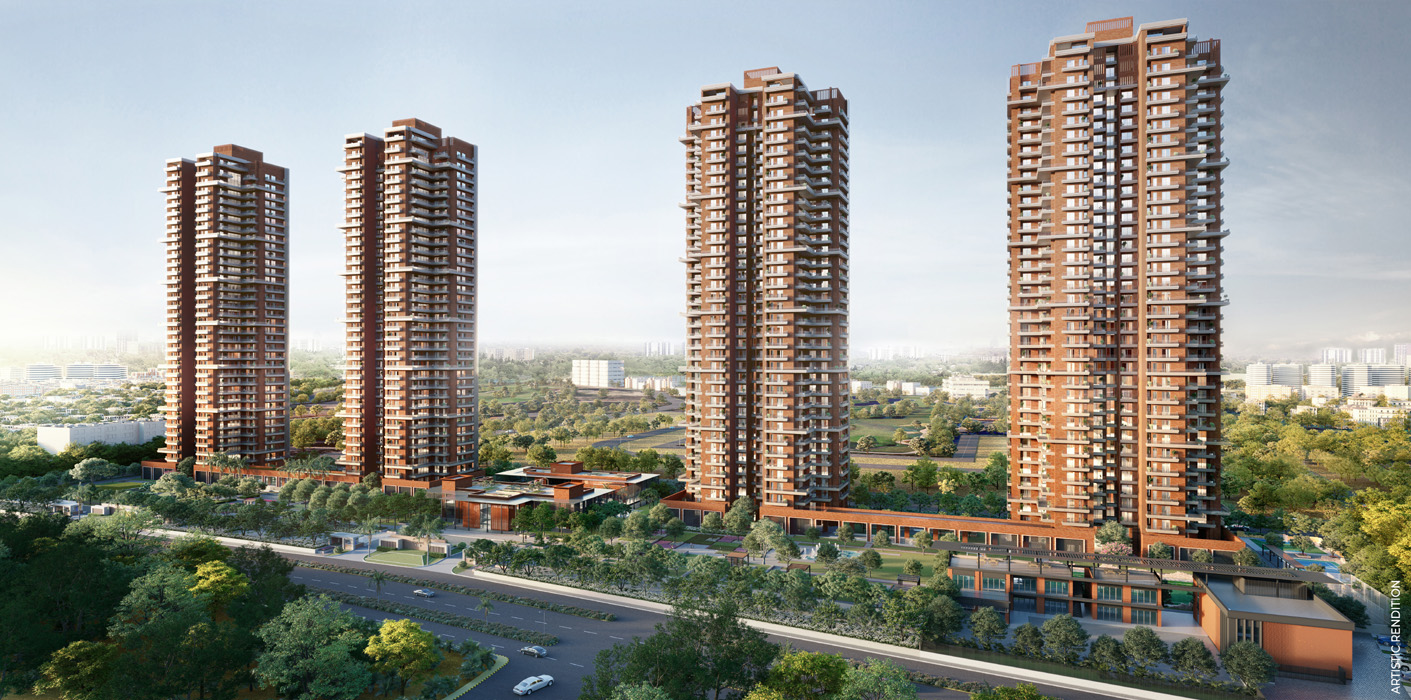
Max Estates has built its commercial portfolio on a consistent thesis: that Grade A+ specification, sustainability certification, and biophilic design are not premium additions. They are the baseline for a building that works.
The portfolio holds a Dual GRESB 5-Star Rating (2025) – independently verified, the highest possible rating from the Global Real Estate Sustainability Benchmark – across both residential and commercial assets. This is among the strongest sustainability credentials held by any real estate developer in Delhi NCR.
All three commercial assets have achieved 100% occupancy at 25-30% above micro-market rents – a consistent outcome that reflects occupier validation, not developer claim.
Max Towers – Noida
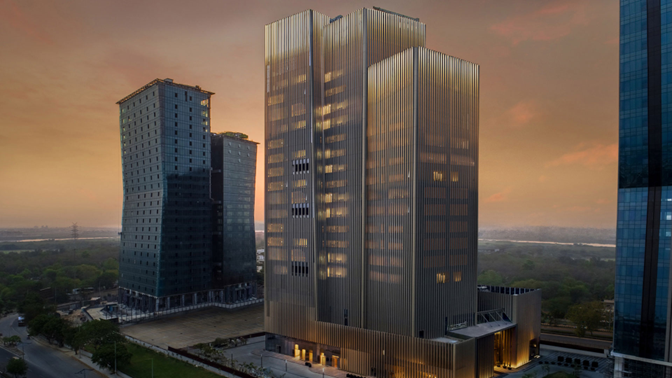
Max Towers in Sector 16B, Noida, is a Grade A+ commercial office on the Noida-Greater Noida Expressway corridor. 100% leased at a significant premium to the micro-market, it anchors Max Estates’ Noida commercial presence and sits within 0.5 km of Okhla Bird Sanctuary Station on the Magenta Line.
The building’s location and specification deliver on the connectivity requirements that today’s occupiers demand: metro access, expressway proximity, and a building environment that supports productive, healthy work.
Max House – New Delhi
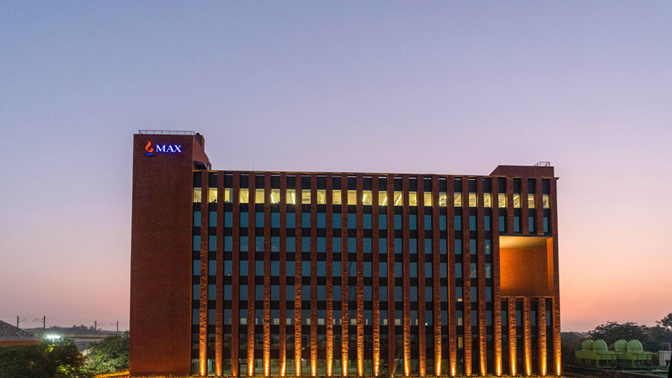
Max House in Okhla, New Delhi, is Max Estates’ Delhi commercial flagship. Approximately 1,05,000 square feet across 10 floors, it holds both LEED Gold and IGBC Gold certifications – the dual credential that institutional occupiers increasingly require as a minimum for new lease consideration.
100% leased at a 25-30% premium to the Okhla micro-market, Max House is the clearest example in Max Estates’ portfolio of what certified Grade A+ space commands from well-specified occupiers in a supply-constrained location.
LEED Gold certification means that Max House has been independently verified for energy efficiency, water performance, indoor environmental quality, and sustainable materials. Occupiers in Max House are not just paying for a premium address. They are placing their workforce in a building that has been designed and verified to support their health and performance.
Max Square – Noida
![Max Square office building with brick facade and glass atrium]](https://cdn.maxestates.in/wp-content/uploads/2026/07/image-11.png)
Max Square in Noida is home to Adobe’s 1.58 lakh square foot NCR office. Adobe is among the most rigorous commercial real estate occupiers in the global technology sector, with formal workplace strategy standards that evaluate buildings across environmental quality, wellness design, and operational performance.
A 1.58 lakh square feet from an occupier with Adobe’s evaluation standards is an independent validation of Max Square’s specification. It is the kind of tenant endorsement that no marketing claim can replicate.
What Occupiers Should Look for in a Commercial Space
For companies evaluating office space against a corporate wellness framework, the following criteria are the most consequential:
- Third-party certification: LEED, IGBC, WELL, or GRESB – independently verified, not self-claimed
- Air quality specification: MERV-13 or better filtration; CO2 monitoring; ventilation rates above ASHRAE standard
- Daylight access: What percentage of the usable floor plate receives natural light?
- Acoustic performance: Is acoustic treatment specified at the ceiling, partition, and structural level?
- Green cover and biophilic design: Trees on site, internal planting, views to the landscape from workstations
- Metro and transport access: Employee commute quality directly affects attendance and mood at the start of the working day
- Building management quality: Smart BMS with real-time air quality and energy dashboards; responsive facilities management
Buildings that can answer these questions with specific, documented responses are the ones designed for occupant performance. Buildings that respond with general assurances are not.
The Building Is the Wellness Programme
Corporate wellness budgets are growing. Occupier sophistication about what drives workforce health is growing with them.
The companies that will lead on employee wellness over the next decade are not necessarily those spending the most on benefits. They are the ones who understand that the building their people work in every day is the most powerful wellness lever available to them – and who choose accordingly.
Grade A commercial property with verified sustainability credentials, biophilic design, and strong indoor environmental quality does not just provide a place to work. It creates the conditions for people to perform, feel well, and stay.
That is the edge. And it is compounding every year as the evidence base grows and the talent market’s expectations rise.
Interested in Max Estates’ Grade A+ commercial portfolio in Noida and New Delhi? Visit maxestates.in to explore Max Towers, Max House, and Max Square.