
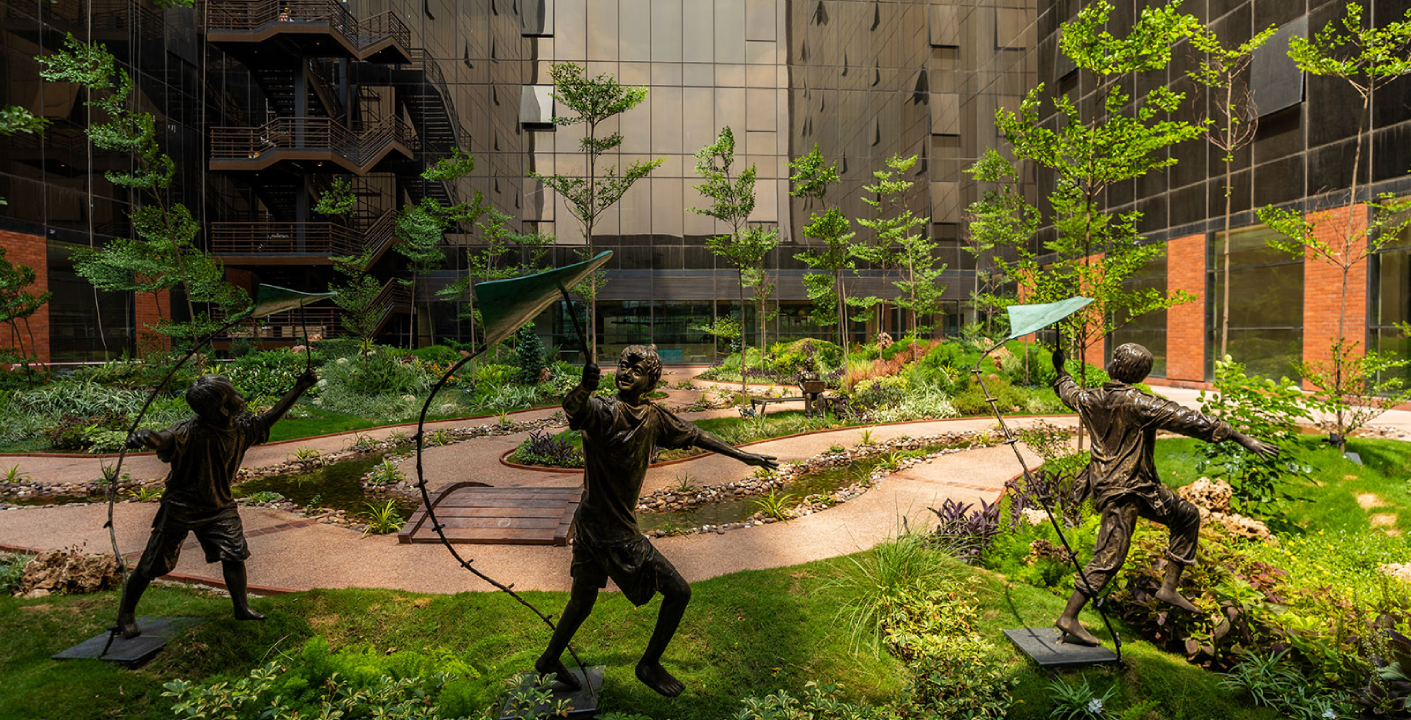
The most meaningful workplaces today are designed around people as much as performance.
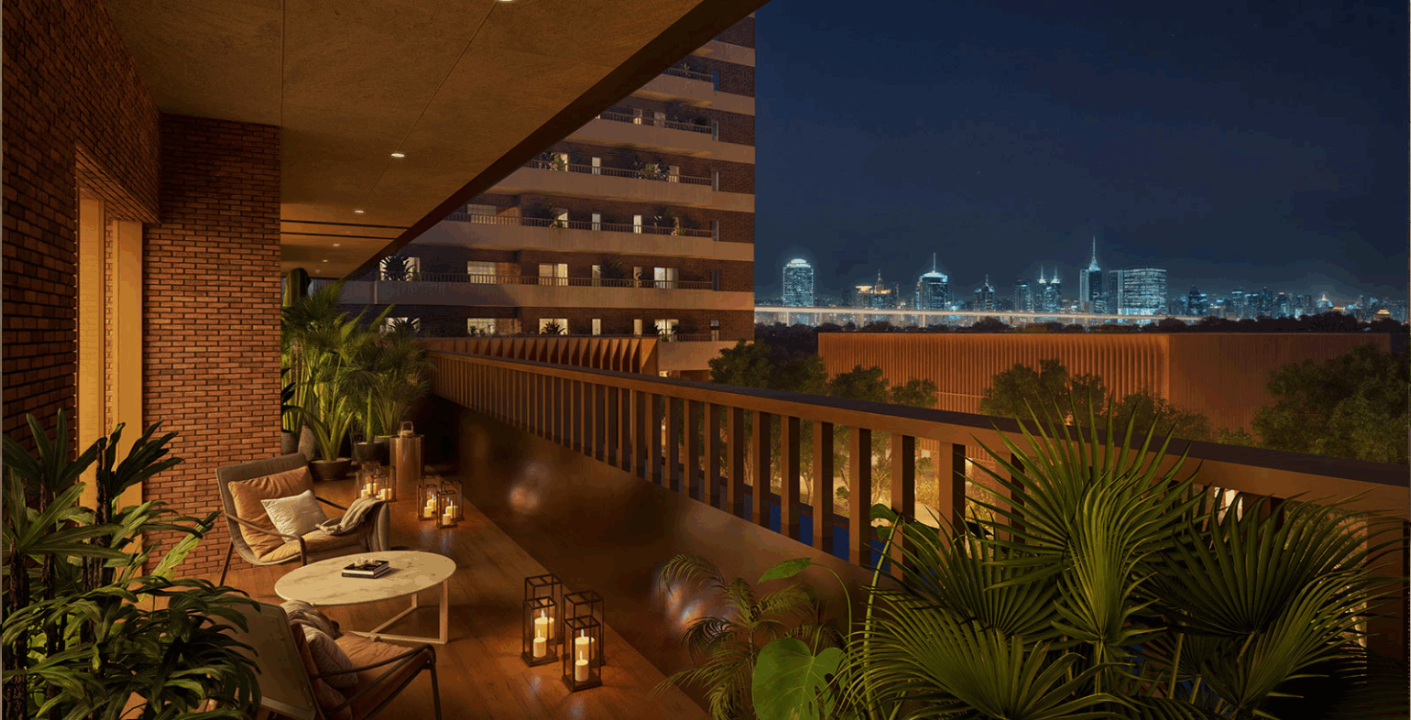
They have trees in lobbies, natural light across every floor, plants integrated into workstations, and outdoor spaces that blur the line between inside and outside. They are quieter, cleaner, and better ventilated than the glass-and-concrete blocks they are replacing.
This is not a design trend. It is a response to evidence.
Research consistently shows that employees in nature-integrated, certified sustainable offices are more productive, report lower stress, take fewer sick days, and stay in their jobs longer. For companies competing for talent in India’s tightest labour markets, the quality of the physical office has become a measurable strategic asset.
The demand side has followed. India’s largest corporate occupiers – global technology firms, financial services companies, and professional services practices – now shortlist only certified sustainable office space in their real estate procurement processes. Buildings without LEED, IGBC, WELL, or GRESB credentials are removed from consideration before site visits begin.
This shift is not simply about aesthetics. It reflects a growing understanding of the relationship between workplace design and human experience.
This article explains what sustainable office space actually means, what it delivers, and why the Noida commercial market is one of the most interesting places to watch this shift unfold.
What Makes an Office Sustainable?
Sustainability in the workplace extends beyond energy efficiency or green certifications. At its best, it considers the long-term impact of a building on people, communities, and the environment.
- Environmental performance: How efficiently the building uses energy, water, and materials. This includes solar orientation, insulation quality, HVAC efficiency, water recycling, and waste management. A high-performing building uses measurably less energy per square foot than a conventional one.
- Indoor environmental quality: Increasingly, organisations are recognising indoor environmental quality as an important contributor to employee wellbeing and workplace performance. Air quality, ventilation rates, CO2 monitoring, VOC-free materials, natural light penetration, acoustic performance, and thermal comfort all fall under this category. This dimension is often underweighted in Indian commercial development and disproportionately valued by global occupiers.
- Site and community impact: How the building relates to its surroundings. Green cover, permeable surfaces, urban heat island reduction, proximity to public transport, and biodiversity all factor into how a building performs at the neighbourhood level.
Third-party certification frameworks – LEED, IGBC, WELL, and GRESB – evaluate all three dimensions and provide independent verification. A building that self-claims sustainability without third-party verification is making an unverifiable assertion.
Why Biophilic Design Works in Offices
Biophilic design is the integration of natural elements into built environments. In commercial real estate, it translates into daylight maximization, living green walls, indoor plants, natural materials, water features, views to the outside, and outdoor working spaces.
A growing body of research highlights the positive impact of nature-integrated environments on wellbeing, focus, and productivity.
The Productivity Case
A study by the Human Spaces Report, covering 7,600 workers across 16 countries, found that employees in offices with natural elements reported 15% higher well-being and 6% higher productivity than those in offices without them.
Separate research from the World Green Building Council found that improved indoor air quality alone – a feature of well-certified sustainable buildings – can boost cognitive performance by 11%. In knowledge work, where output is almost entirely cognitive, this is a significant margin.
The mechanisms are biological. Natural light regulates circadian rhythms, improving sleep quality and daytime alertness. Views of greenery reduce mental fatigue through attention restoration. Clean air reduces headache frequency and mental fog. Plants lower ambient CO2 levels, which directly improves concentration.
Together, these factors contribute to environments where people can feel more focused, energised, and comfortable throughout the workday.
The Talent Case
India’s major corporate occupiers are competing for talent that has spent two or more years working from well-furnished, personally curated home environments. As employees have become accustomed to more personalized working environments, expectations from the workplace have evolved as well.
A 2024 CBRE survey found that 58% of employees in India’s top six cities cited office quality as a factor in their decision to accept or remain in a job. Among technology workers – the most in-demand segment – the figure was 71%.
Workplaces that offer comfort, connection, and a sense of wellbeing can create stronger reasons for people to come together in person. They give employees a space that is demonstrably better than home for focus, collaboration, and social energy. That matters directly to occupier companies who are managing hybrid attendance.
Green Certifications – What They Mean
Not all sustainability claims are equal. Here is a brief guide to the certifications that carry the most weight with institutional and multinational occupiers in India.
| Certification | Issued By | What It Covers |
| LEED Gold / Platinum | US Green Building Council | Energy, water, materials, indoor quality, site |
| IGBC Gold / Platinum | Indian Green Building Council | India-specific green building standards |
| WELL Gold / Platinum | International WELL Building Institute | Occupant health and well-being specifically |
| GRESB 4/5-Star | Global Real Estate Sustainability Benchmark | Portfolio-level ESG performance, investor-facing |
LEED and IGBC are the most widely recognized certifications in Indian commercial real estate. GRESB has become the standard for institutional and listed real estate companies reporting to investors. WELL is growing rapidly among occupiers with formal employee wellness commitments.
A building holding multiple certifications – for example, both LEED Gold and IGBC Gold – signals a developer who has invested in third-party validation across multiple frameworks.
What Modern Workplaces Are Being Designed Around
The requirements of India’s most sophisticated commercial tenants have shifted considerably since 2020. The hybrid work era has made the physical office a more deliberate, higher-stakes environment. Many organisations are becoming more intentional about the spaces they occupy, placing greater emphasis on quality, flexibility, and employee experience.
Current requirements from the top tier of the occupier market include:
- LEED Gold or IGBC Gold as a minimum for new lease consideration
- MERV-13 air filtration or better, with real-time air quality monitoring
- Daylight access across at least 75% of the floor plate
- Outdoor or semi-outdoor work and break spaces
- EV charging, cycling infrastructure, and end-of-trip facilities
- Smart building management systems with energy and occupancy dashboards
- F&B, wellness, and fitness amenities within the building or campus
The Adobe lease at Max Square – 1.58 lakh square feet in Noida – is a useful data point here. Adobe is among the world’s most sophisticated real estate occupiers. Its workplace strategy teams evaluate buildings against detailed environmental, wellness, and design standards before any lease is signed. The presence of a global organisation such as Adobe reflects the growing importance of workplaces that align with evolving expectations around sustainability, design, and employee wellbeing.
Max Square – Where Nature Meets Work in Noida
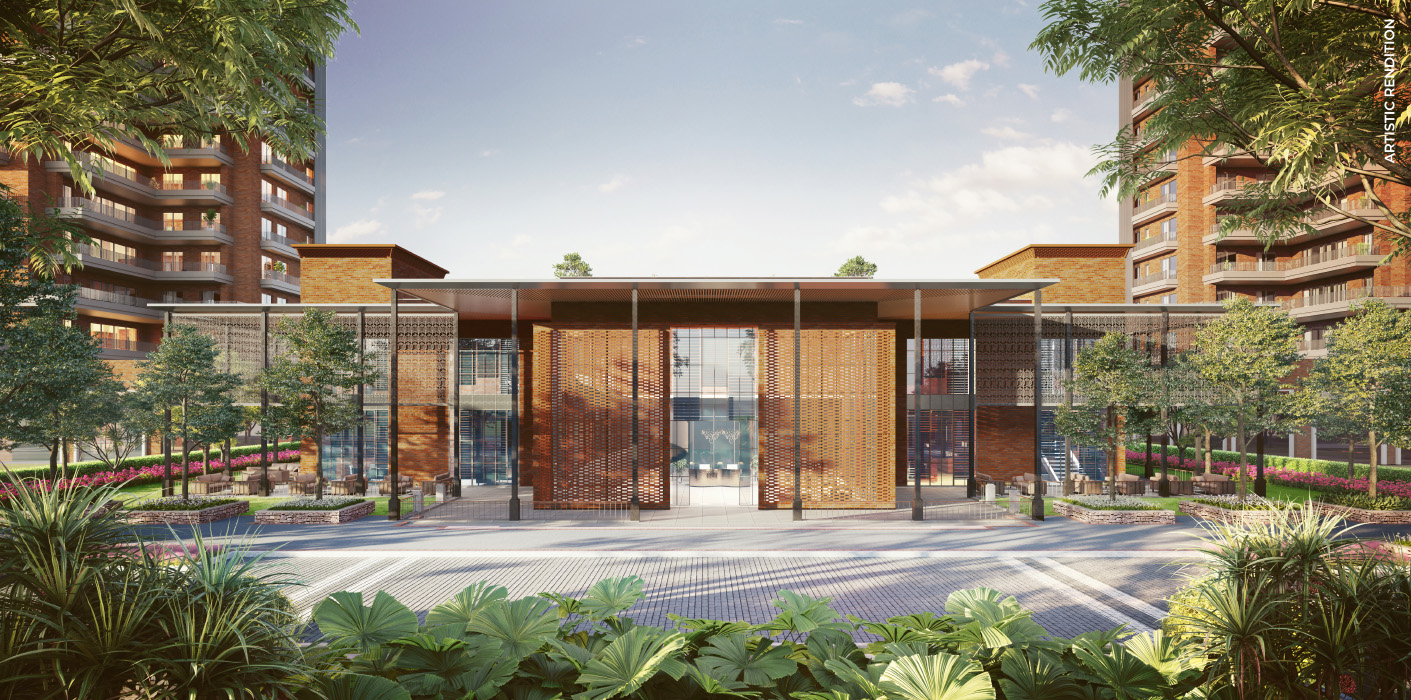
Max Square in Noida is Max Estates’ commercial asset on the Noida Expressway corridor, currently operational and home to Adobe’s 1.58 lakh-square-foot NCR office. Max Square has been envisioned as a workplace that balances performance, sustainability, and human experience.
Max Square sits within Max Estates’ broader commercial portfolio – which includes Max Towers (Sector 16B, Noida) and Max House (Okhla, New Delhi), both 100% leased at 25-30% above micro-market rents. Together, these developments reflect Max Estates’ broader approach to creating thoughtfully designed commercial environments across Delhi NCR.
Max Estates holds a Dual GRESB 5-Star Rating (2025) – the highest possible rating from the Global Real Estate Sustainability Benchmark – covering both its residential and commercial portfolios. This is independently verified and represents one of the strongest sustainability credentials held by any developer in the Delhi NCR market.
Max House, the company’s Okhla asset, holds both LEED Gold and IGBC Gold certifications – the dual certification combination that institutional occupiers increasingly require as a baseline.
For companies evaluating office space in Noida, the presence of Adobe at Max Square carries its own signal. A global technology company with a formal workplace strategy does not sign 1.58 lakh square feet without rigorous evaluation. The lease validates the building’s quality independently of any developer’s claim.
The Business Case for Sustainable Office Space
For occupier companies, the economics of sustainable office space are now straightforward.
The productivity gains from improved indoor environmental quality – documented across multiple peer-reviewed studies at 6-15% – outweigh the rent premium associated with Grade A certified buildings in most scenarios. A 10% productivity improvement in a knowledge workforce of 500 people generates significantly more value than the 25% rent premium costs.
The talent benefit adds a further layer. Reduced attrition, faster recruitment cycles, and improved employer brand in markets where office quality is a visible differentiator all carry measurable financial value.
For investors and developers, the case is equally clear:
- Certified buildings command 25-40% rent premiums in major Indian markets
- Vacancy rates in Grade A certified buildings are consistently below those of non-certified peers
- Institutional investors and listed entities increasingly exclude non-certified assets from portfolios due to ESG mandates
- Resale and capital value growth in certified buildings outpaces the broader commercial market
The sustainable office is not a premium product for ESG-motivated occupiers. It is the market standard for the top tier of the commercial real estate ecosystem – and that tier is growing.
Sustainability Is Now the Baseline
Sustainable office space is not the future of commercial real estate. It is the present.
In Delhi NCR’s top micro-markets, Grade A certified buildings are the ones with full occupancy and premium rents. They are the ones global companies choose when they expand or consolidate. They are the ones institutional investors acquire and hold.
Nature-integrated design, third-party certification, and demonstrated occupant well-being are no longer differentiators. They are the entry criteria for the market segment that matters.
For companies evaluating office space in Noida or Delhi, the question is no longer whether sustainability matters. It is whether the building you are considering has done the work to prove it.
Interested in a commercial portfolio in Noida and Delhi? Visit Max Estates to learn more about Max Square, Max Towers, and Max House.