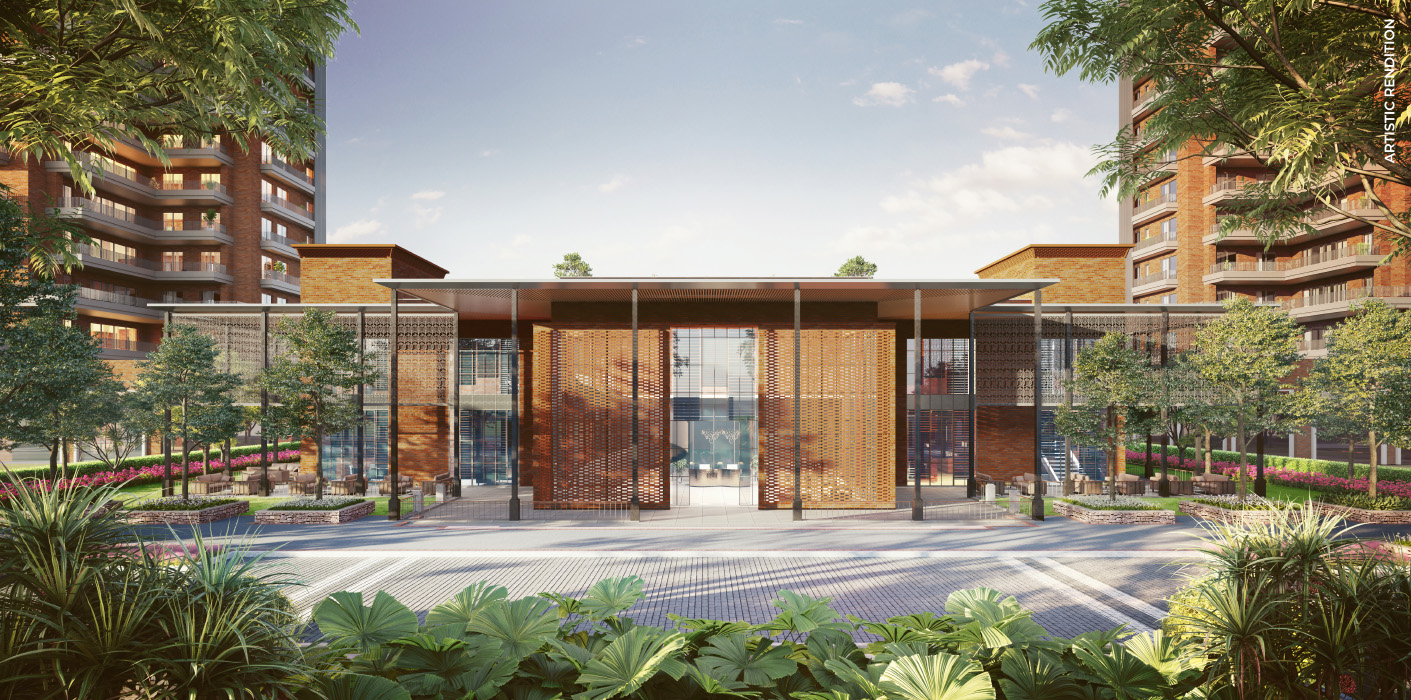


Finding Calm in the Chaos of City Life at Max Estates
The city gives you many things – opportunity, connectivity, culture, and convenience. What it often asks for in return is quiet.
Opportunity, connectivity, culture, convenience – Delhi NCR delivers all of it. But it also delivers congestion, pollution, noise, and a pace of life that rarely switches off. For most urban residents, stress is not an occasional visitor. It has become part of the backdrop of everyday life.
The question is not whether to leave the city. For most people, that is not a realistic option. Does your home offer a sense of refuge?
Most homes in Delhi NCR do not. They are located in the city, but they are not designed as a retreat from it. Thin walls, high density, minimal green cover, and constant acoustic exposure mean that stress follows residents from the street into their living rooms.
A genuinely calm home is not about square footage or finishes. It is about how the space is designed – density, landscape, layout, and community – to create a real psychological and physical boundary between the city outside and the life inside.
The Real Cost of Urban Stress
Urban stress is not just uncomfortable. It has documented health consequences.
Research from the WHO and multiple urban health studies shows that:
- Chronic noise exposure above 55 decibels raises the risk of hypertension and heart disease
- High-density living is associated with elevated cortisol levels and reduced immune function
- Limited access to green space correlates with higher rates of anxiety and depression
- Air pollution in Indian cities – particularly in Delhi NCR – contributes to cognitive decline and respiratory disease
Delhi ranks among the world’s most polluted cities by air quality. It is consistently in the top tier for noise pollution as well. Residents absorb these conditions every day.
The cumulative effect is significant. People who live in high-stress urban environments without adequate recovery spaces age faster, sleep worse, and report lower life satisfaction – regardless of income or career success.
This is why the spaces where we rest, recharge, and reconnect with ourselves have become more important than ever.
Your home is the primary recovery space available to you. If it does not function as one, nowhere in the city will.
Why Home Design Determines How You Recover
Two people can live in the same city and have completely different stress profiles – based entirely on the design of their homes.
The factors that determine whether a home supports recovery or compounds stress are specific and measurable:
- Density: How many units share your building, your floor, your outdoor space. High density means more noise, less privacy, and fewer calm zones.
- Green cover: Access to trees, water, and natural landscapes lowers cortisol levels measurably. A morning walk through a landscaped garden is physiologically different from a walk through a parking lot.
- Acoustic separation: How much of the city’s noise penetrates your walls, windows, and floors. A home designed for acoustic comfort feels physically different within minutes of entering it.
- Air quality: VOC-free materials, good ventilation design, and green cover around the building all improve the air you breathe at home. This matters especially in Delhi NCR, where outdoor AQI is often hazardous.
- Community design: A home that fosters a sense of belonging reduces social stress. A building where residents are isolated from each other – despite living meters apart – does not.
Many of these qualities are not immediately visible during a site visit. They are shaped by decisions made much earlier in the design process.
What a Calm Home Actually Needs
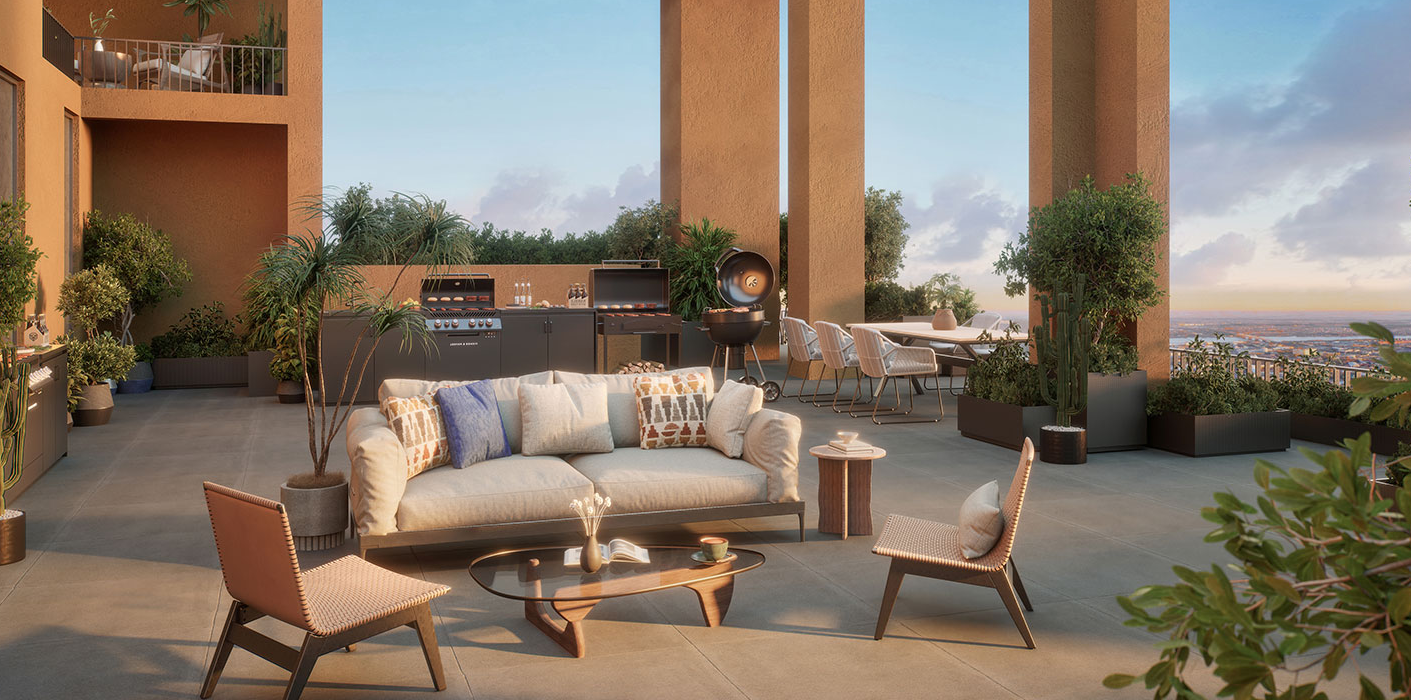
![Luxury rooftop terrace lounge with outdoor seating and BBQ setup]](https://cdn.maxestates.in/wp-content/uploads/2026/06/image-16.png)
[alt text – Luxury rooftop terrace lounge with outdoor seating and BBQ setup]
Distance from Noise Sources
The loudest noise sources in Delhi NCR are expressways, arterial roads, metro viaducts, and commercial zones. A home’s position relative to these – and the acoustic buffer between them – determines the baseline noise level inside.
Effective buffers include distance, dense tree cover, earth berms, and acoustic window specifications. Projects that ignore these sit in the city at the same noise level as the street below.
Green Within Reach
Access to green space is not about aesthetics. It is about neurological recovery.
Studies on attention restoration theory show that 20 minutes in a natural environment measurably reduces stress hormones. The effect requires no effort – it is passive and biological. Trees, water, open sky, and natural materials activate a recovery response that urban environments suppress.
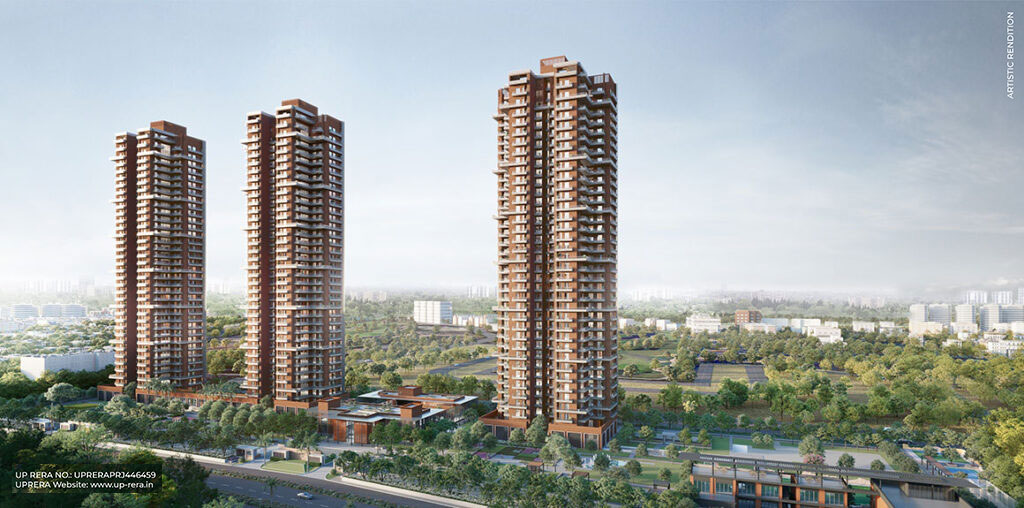
A project with 7 acres of landscaped grounds gives every resident daily access to this effect. A project with a narrow strip of lawn between towers does not.
Space to Breathe
Density is felt even when it is not consciously noticed. Crowded lobbies, full lifts, packed parking areas, and shared amenities with hundreds of families all create low-level social stress that accumulates across the day.
Low-density projects – where the number of families per acre is genuinely limited – create a different quality of daily experience. There is space to be alone in a common area. Amenities are accessible without queuing. Neighbors are present but not overwhelming.
This is why density is one of the most important specifications to verify before buying – and one of the least advertised.
A Sense of Belonging
The final element of a calm home is less tangible but equally important.
Loneliness is a significant health risk – the WHO now classifies chronic social isolation as equivalent in health impact to smoking 15 cigarettes a day. In high-density urban buildings, it is surprisingly common. Residents can live for years without knowing their neighbours.
Communities designed to foster genuine connection – through thoughtful shared spaces, intergenerational design, and activities that bring people together – actively reduce this risk. They make city living sustainable over the long term.
What Delhi NCR Buyers Now Prioritise
The shift is visible in the data.
JLL’s 2024 India Residential Report found that “environmental quality within the home” had moved into the top five buying criteria for buyers in the Rs. 3 Cr+ segment, up from outside the top ten in 2019. Knight Frank’s equivalent research shows green cover and community design ranking alongside location and price for luxury buyers.
This is not a generational or lifestyle preference. It reflects a growing awareness that the quality of a home’s design determines the quality of daily life inside it.
This reflects a broader shift in how people define quality of life and what they expect from the places they call home.
Buyers at the ultra-luxury end of the Delhi NCR market are now asking specific questions: What is the density? How many trees? What is the acoustic specification? Is there a wellness framework behind the design?
Projects that can answer these questions concretely are commanding premiums. Those that cannot are competing on price alone.
How Max Estates Designs for Calm
Max Estates builds within the LiveWell framework – a nine-pillar approach to residential well-being covering Environmental Harmony, Intentional Design, Peace of Mind, Belonging, and Sustainability, among others.
These are not marketing positions. They are design briefs that translate into specific project decisions on density, landscape, layout, and community infrastructure.
The intention is simple: to create environments that feel thoughtful, balanced, and supportive of everyday wellbeing.
Max Estates also holds a Dual GRESB 5-Star Rating (2025) – independently verified for both residential and commercial portfolios. GRESB is the highest global benchmark for real estate sustainability. Achieving a dual 5-star rating requires demonstrated performance, not just stated intent.
Calm Is a Design Decision
The city will not become quieter or slower. Urban density in Delhi NCR will increase, not decrease, over the next decade. Traffic, pollution, and the pace of daily life are structural features of the environment – not problems that resolve themselves.
What can change is the quality of the space you return to every day.
A home designed for calm – low density, generous green cover, acoustic thoughtfulness, and genuine community – functions as a daily reset. It does not remove you from the city. It gives you the recovery capacity to thrive.
That distinction is worth understanding before you buy. The difference between a home that restores you and one that does not becomes clearer over the years – not during a show flat visit.
Ready to experience the difference? Book a site visit with Max Estates and walk through Estate 128, Estate 360, or Estate 105 with this question in mind: Does this home give me back my calm?