
The short answer: it’s the future.
The Global Wellness Institute valued wellness real estate at $438 billion in 2022. It projects the segment to reach $913 billion by 2027. That’s not a trend. That’s a structural shift in how people think about the places they call home.
For decades, a “good home” meant a good location, a fair price, and decent finishes. That formula no longer holds, especially in India’s top urban markets. Buyers today want a home that actively improves their health, reduces stress, and supports their everyday lives.
In Delhi NCR, this shift is already visible. A small number of developers are now building to formal wellness standards: low density, certified green design, movement infrastructure, and community-first planning. Others are still in the process of adapting to these evolving expectations.
What Is Wellness Real Estate?
Wellness real estate means homes and communities designed with health as a first principle, not a feature added after the floor plans are done.
It goes well beyond a gym on the ground floor or a jogging track around the perimeter. A genuine wellness home integrates:
- Air and water quality: HEPA filtration, VOC-free materials, clean water systems
- Natural light and ventilation: layouts that maximise daylight and cross-ventilation
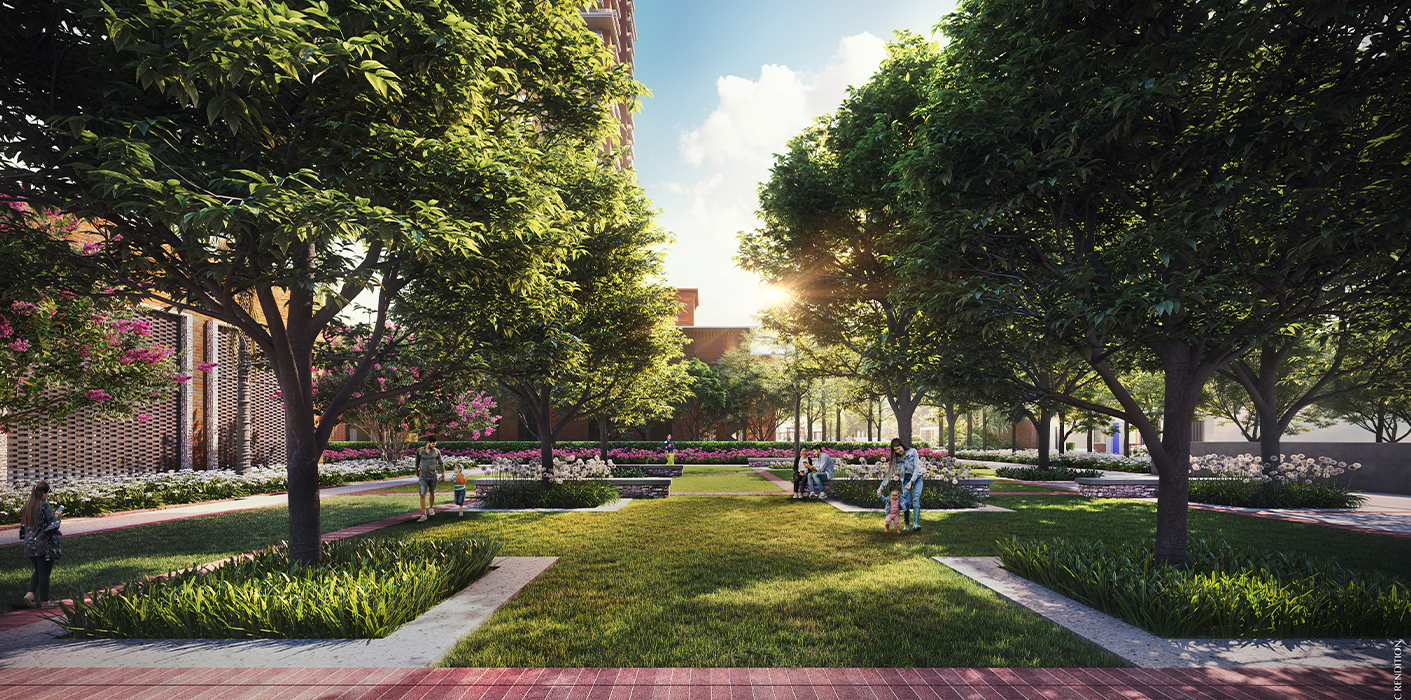
- Biophilic design: trees, water features, and natural materials that reduce cortisol levels
- Movement infrastructure: paths, sports courts, and floor plans that make physical activity effortless
- Acoustic design: separation from noise at the unit and community level
- Community spaces: areas that bring people together, reducing isolation
The WELL Building Standard, LEED, IGBC, and GRESB certifications are the third-party benchmarks that verify these features are real, not just claimed.
Why Wellness Demand Has Grown
The Post-COVID Reset
Before 2020, health amenities were nice-to-have; after COVID, that changed permanently.
People spent 18+ months at home. Those homes either supported their mental and physical health, or they didn’t. The difference was deeply felt.
Post-pandemic research shows that:
- Health and well-being features moved from “nice to have” to “must have” for buyers in the ₹1 Cr+ segment
- Proximity to green space became a top-five purchase criterion in urban India
- Buyers across global markets are willing to pay a 10-25% premium for certified wellness features
This was not a temporary reaction. Buyers, especially at the luxury and ultra-luxury end, permanently raised their expectations.
The Numbers
The market data is unambiguous:
| Year | Wellness Real Estate Market (Global) |
| 2019 | $275 Billion |
| 2022 | $438 Billion |
| 2027 (Projected) | $913 Billion |
That is more than 3x growth in under a decade. JLL and Knight Frank both report that wellness features now rank among the top purchase motivators for Indian luxury buyers.
Such sustained growth signals a broader shift in buyer priorities rather than a passing trend.
Urbanisation Makes It Urgent
Delhi NCR adds millions of urban residents every decade. Air quality, noise pollution, and density are not abstract problems; they affect daily health outcomes in measurable ways.
A home with clean-air design, acoustic separation, and structured green cover is not a luxury item. It is a direct solution to a documented, worsening urban problem.
This is why wellness real estate will not retreat. The problem it solves is getting larger, not smaller.
Key Features of a Real Wellness Home
The marketing language around wellness can get vague fast. Here is what actually matters when you evaluate a project.
Low density. Fewer homes per acre means more space, more quiet, and more green. A project with 800 units on 8 acres is not a wellness project, regardless of what the brochure says. Look for projects under 30–35 units per acre for luxury.
Measurable green cover, biophilic design backed by numbers. A project with 700 trees and planned plant diversity is categorically different from one with a few lawns between towers.
Third-party certification, such as GRESB, LEED, IGBC, or WELL, provides independent verification that the wellness claims are accurate. No certification means unverified claims.
Movement by design: Walking paths, cycling tracks, sports facilities, and floor plans designed to reduce sedentary time by default; not just a gym that requires effort to visit.
Community infrastructure: Spaces that bring residents together. Intergenerational design that works across age groups. This directly addresses isolation, which the WHO now classifies as a significant health risk equal to smoking 15 cigarettes a day.
Wellness Real Estate in India: Where It Stands
India’s wellness real estate market is early-stage compared to Singapore, Dubai, or the United States. But the gap is narrowing quickly.
In Delhi NCR, a small number of developers are building genuine wellness standards. The majority are using the term as a marketing label with no structural backing.
Markers of a genuine wellness developer in India:
- Third-party sustainability certification – not self-claimed
- Density under 35 units per acre for luxury projects
- A published, formal wellness philosophy integrated into design
- A healthcare or wellness partner for specialised segments (senior living, medical wellness)
- Listed entity status – financial accountability to public shareholders
Only a limited number of developers currently demonstrate all of these characteristics in a comprehensive manner.
How Max Estates Leads Wellness Real Estate in Delhi NCR
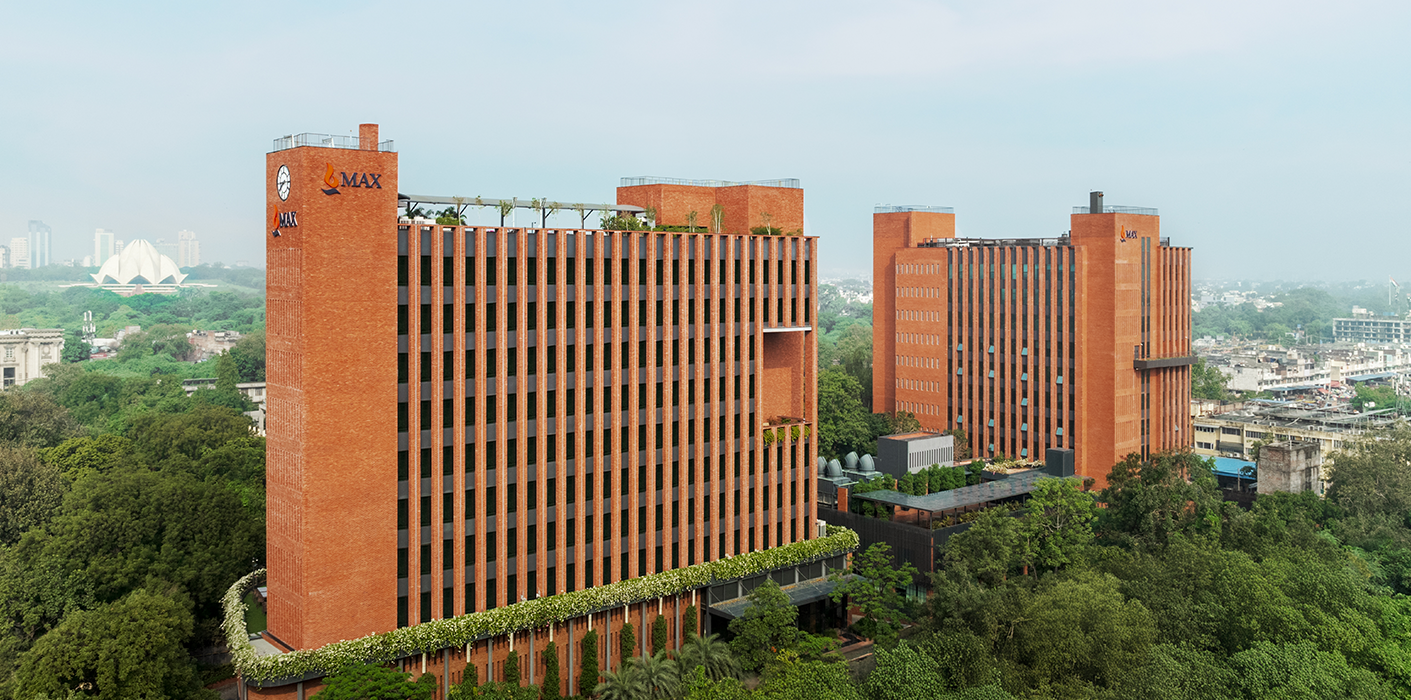
Max Estates is one of the few developers in the NCR with a structured, published wellness framework, through its LiveWell philosophy, applied across all residential projects.
LiveWell operates across nine pillars: Empathetic Hospitality, Generosity, Environmental Harmony, Intentional Design, Peace of Mind, Belonging, Inclusivity, Sustainability, and Food & Nutrition.
These are design principles with direct project-level outcomes.
Max Estates also holds a Dual GRESB 5-Star Rating (2025), independently assessed across both residential and commercial portfolios. This is among the strongest sustainability credentials held by any real estate developer in India.
Estate 128 – Wellness at Ultra-Luxury Scale
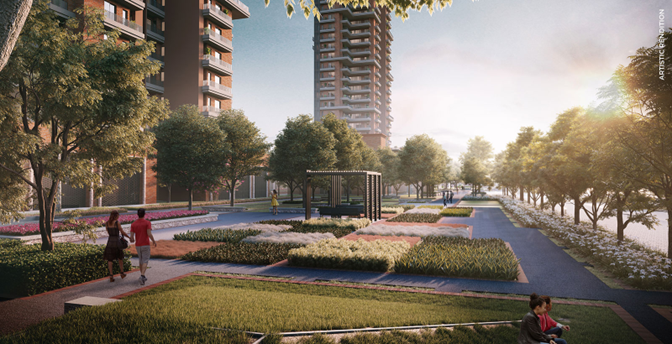
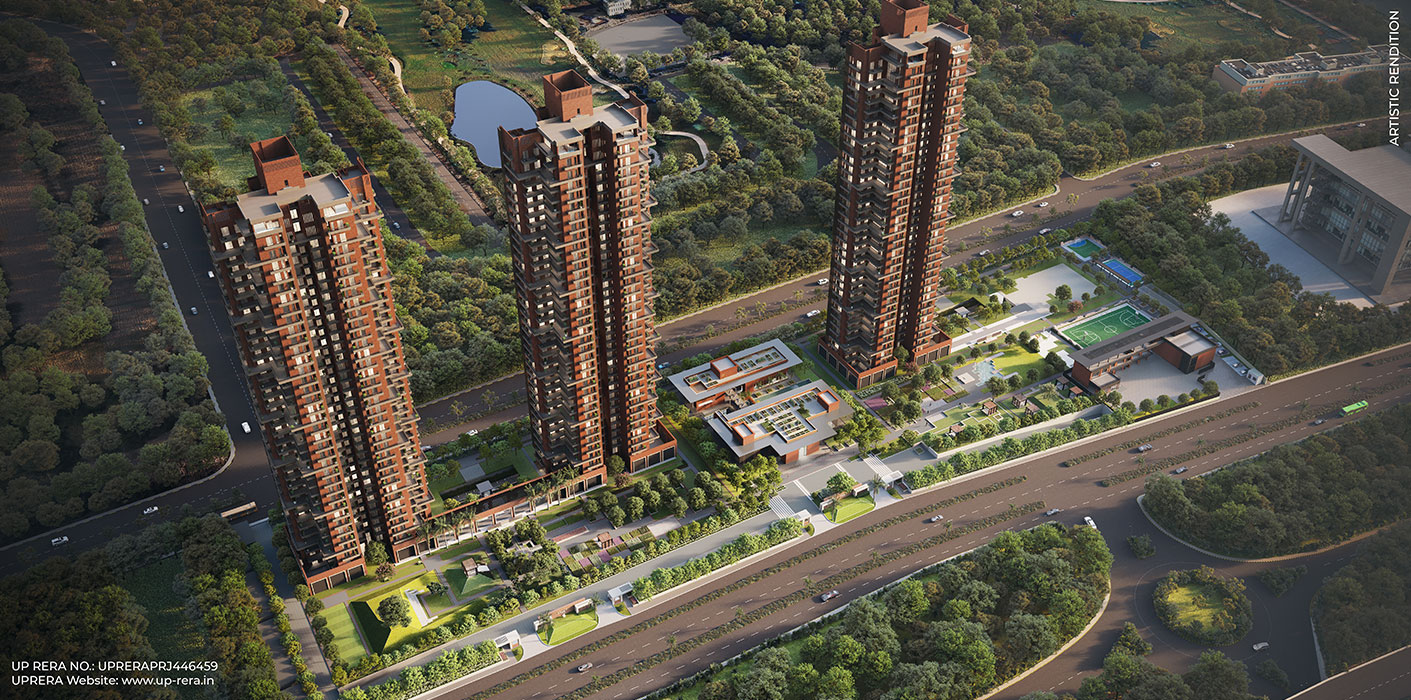
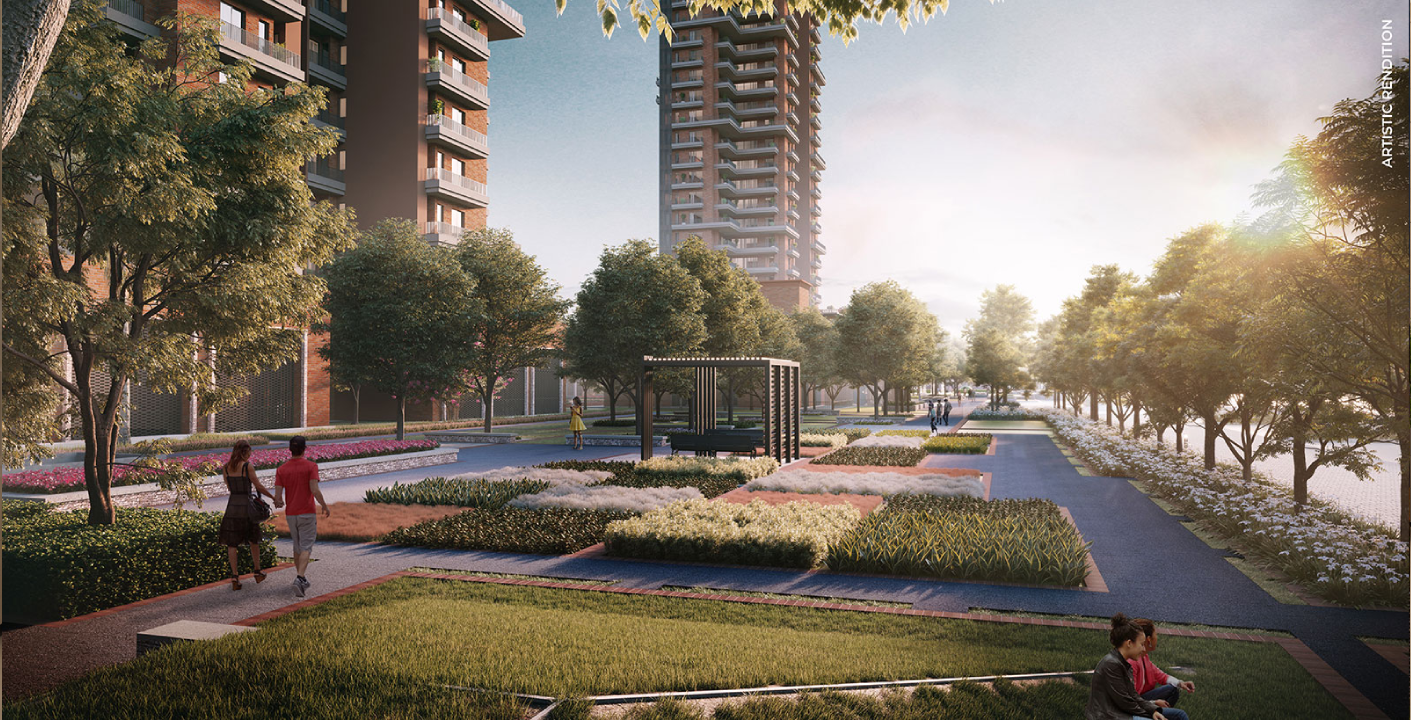
Estate 128 in Sector 128, Noida, is built around the LiveWell framework. 268 units on 10 acres, a density ratio far below the Noida Expressway corridor average.
The landscape spans 7 acres on a river-journey theme – designed to create sensory calm through movement from mountain to ocean environments. 4 BHK apartments start at ₹11.35 Crore.
Estate 360 – Intergenerational Wellness
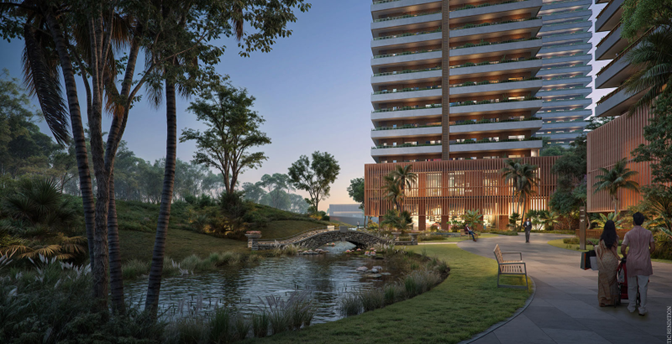
Estate 360 in Sector 36A, Gurugram, is the first intergenerational residential community in Delhi NCR. Two dedicated towers within the project are managed by Antara Senior Living, the Max Group’s senior care brand.
The project features 700 trees, 33 plant species, and 60+ well-being amenities across 11.8 acres. It addresses social isolation and senior health at the architectural level, not as an afterthought. HRERA: 87 OF 2024.
Estate 105 – Movement as the Design Brief
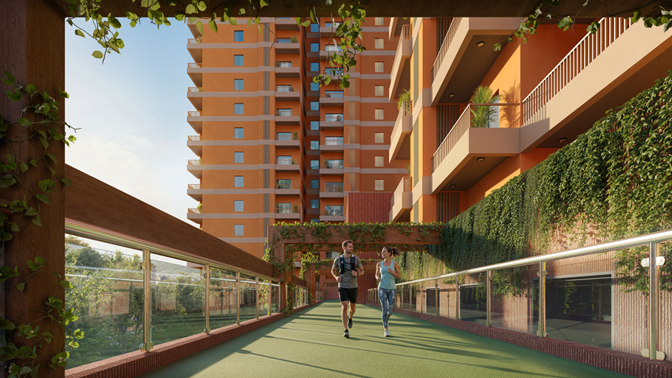
Estate 105 in Sector 105, Noida, was built around a movement-first brief. Floor plans, circulation paths, and community infrastructure all make physical activity a default behavior – not a motivated choice.
It is the clearest expression of wellness real estate as structural design rather than brochure language.
What Buyers Should Ask Before They Buy
If you are evaluating a project on wellness grounds, ask these five questions before you proceed:
- What is the density? Units per acre verify, don’t assume.
- What certifications does it hold? Ask for GRESB, LEED, IGBC, or WELL documentation.
- What is the actual green cover? Tree count, species diversity, and landscape square footage.
- Is there a formal wellness philosophy? Published and verifiable, it should not be a slogan.
- Who is the healthcare or wellness partner? Especially important for intergenerational or senior-living components.
Vague or absent answers to any of these are a signal to look harder.
Wellness Real Estate Is a Permanent Shift
Wellness real estate is not a passing trend. It is the direction the entire market is moving, driven by health awareness, rising urban density, demographic change, and a permanent reset in buyer expectations.
In India, the segment is still forming. That creates a specific opportunity: buyers who move now into projects built by developers with verified wellness credentials are positioned well for both quality of life and long-term asset appreciation.
The premium for certified wellness homes is real. The demand is structural. The developers who lead this segment today will define luxury real estate in Delhi-NCR over the next decade.
Ready to see wellness real estate in person? Book a site visit with Max Estates and discover how the LiveWell comes to life at Estate 128, Estate 360, or Estate 105.